


The occasional snore, snort, or throat-clearing cough is usually harmless, but breathing that turns persistent, labored, or faster than normal at rest tends to trace back to one of three culprits: obstructed airways in brachycephalic (flat-faced) dogs, asthma in cats, or fluid buildup from congestive heart failure. Each condition sounds a little different at home, and each can tip from manageable into life-threatening with little warning. Blue-tinged gums, foam coming up with a cough, open-mouth breathing in a cat, or a resting breathing rate that keeps climbing are signs that the time for watching and waiting is over. If the changes are milder, take a minute to note when the noise happens, what makes it worse, and how many breaths your pet takes per minute at rest, because those details help your vet judge how urgent things really are.
Oliver Animal Hospital provides daytime urgent care in Austin, and a pet who is working too hard to breathe is exactly the patient we want to hear about right away. In-house chest X-rays let us look at the airway, lungs, and heart together, which is how we begin sorting a flat-faced dog’s airway trouble from a cat’s asthma from fluid building up behind a struggling heart. We handle every patient gently, because stress makes labored breathing worse, and we walk you through what the images show so the next decision is one we make together. If the breathing is getting worse by the minute or the gums look blue, call us as you head our way, and outside our hours, go straight to the nearest veterinary ER.
The Fast Facts on Labored Breathing
- Most dogs and cats breathe fewer than 30 times per minute at rest, so a rate that climbs and stays high is one of the clearest signals something needs a closer look.
- The sound tells a story: a dry honking cough, a wet gurgle, a high wheeze, and a harsh raspy inhale each point toward a different part of the airway or heart.
- Open-mouth breathing in a cat, blue or pale gums, collapse, or foam coming up with a cough are true emergencies that need care the same day, not tomorrow.
- One set of chest X-rays can show whether the problem lives in the airway, the lungs, or the heart, which is why imaging usually comes early.
When Is My Pet’s Breathing Trouble an Emergency?
Some breathing changes mean the clock is running, and quick action saves lives. The signs below all point to respiratory distress that calls for same-day care, not a wait-and-see approach.
- A cat breathing with their mouth open: Cats almost never pant, so open-mouth breathing is a red flag that a cat is struggling and needs help now.
- Blue, gray, or pale gums, collapse, or deep lethargy: Any of these means the body is short on oxygen and can’t wait.
- A cough that runs past 48 hours with tiredness or fever behind it.
- Thick, green, or bloody nasal discharge, or a sudden nosebleed.
- Gurgling breaths, extreme restlessness, or a flat refusal to eat.
- A resting breath count that stays above 30 to 40 per minute when your pet is calm and cool.
If any of these show up during our hours, call us as you head in. On nights and weekends, our after-hours emergency resources point you to our nearest veterinary ER.
What Do My Pet’s Different Breathing Sounds Actually Mean?
The noise a pet makes when they breathe is one of the best clues you can bring to an appointment, because where the sound comes from and when it happens often points straight at the problem. A wheeze, a honk, a snort, and a gurgle each carry a different level of worry.
This quick guide matches the sound you’re hearing at home to what it most often means:
| Sound | What you hear | What it often points to |
| Goose-honk cough | Dry, harsh, honking cough | Kennel cough, or a collapsing trachea in small breeds |
| Wet or gurgly cough | Moist, rattling cough, sometimes with foam | Fluid in the airways from heart disease or pneumonia |
| Wheeze | High-pitched whistle, often on the exhale | Narrowed lower airways, the classic sound of feline asthma |
| Stridor | Harsh, loud rasp on the inhale | Narrowing high in the airway, often laryngeal paralysis in older large-breed dogs |
| Stertor | Low snoring or snorting rattle | Congested or crowded upper airways, common in flat-faced breeds |
| Reverse sneeze | Rapid, snorting inhales in short bursts | Throat or soft palate irritation, usually brief and harmless |
When Is Coughing in Dogs and Cats a Problem?
A cough now and then, after a big drink of water or a tug on the leash, is usually nothing. A cough becomes a reason to call when it turns frequent, keeps a pet up at night, comes with tiredness, or brings up foam or fluid. The sound itself narrows things down:
- A dry, honking cough that sounds like a goose points toward irritation or collapse in the windpipe. A dog who picks up kennel cough after boarding or a trip to the dog park often starts honking within a week of exposure. The same goose-honk in a small or toy breed more often points to a collapsed trachea, where the windpipe’s cartilage rings weaken and flatten during breathing.
- Wet or gurgly coughs suggest fluid down in the airways from a heart problem or pneumonia, which can settle into the lungs of both cats and dogs. Coughing that shows up mainly at night or after exercise deserves attention, especially in a senior pet, because a new cough in an older dog is one of the earlier signs of heart disease.
One sound never to wait on: sudden, frantic coughing paired with real distress can mean something is stuck in the airway, and that’s a same-day emergency.
Why Does My Pet Keep Sneezing With Nasal Discharge?
Repeated sneezing with discharge usually means the nasal passages are inflamed, infected, or holding something they shouldn’t.
- Cats are especially prone to an upper respiratory infection, which brings on bouts of sneezing along with watery or crusty discharge around the nose and eyes.
- Dogs and cats who roam grassy areas can inhale plant material, and in the dry summer grass around Austin a foxtail awn can lodge in a nostril and trigger sudden, violent one-sided sneezing.
- Fungal infections, nasal tumors, and many viruses also cause sneezing.
Most sneezing is minor and passes, but nosebleeds, thick green or bloody discharge, or any swelling of the face mean it’s time to be seen.
What Do Wheezing, Stridor, and Snoring Sounds Tell Us?
Wheezing, stridor, and stertor are three noises that deserve special attention, because they can escalate to an emergency quickly.
- A wheeze on the exhale is a classic sign of feline asthma or allergic bronchitis in either species, where inflamed airways tighten and turn each breath into work.
- Stridor, a loud raspy sound during an inhale, is typically due to narrowing that sits high in the airway where swelling or paralysis can close things off quickly. Laryngeal paralysis is a classic example, more common in older large breed dogs.
- Stertor, a snorting or snoring noise, is common in a flat-faced dog and gets louder and harder with heat, excitement, and extra weight. A little stertor isn’t concerning; stertor with every breath or associated with gasping for air is a sign of BOAS, or brachycephalic obstructive airway syndrome.
- Cats can develop noisy, obstructed breathing too, and a nasopharyngeal polyp growing behind the nose can slowly block airflow in a young cat.
Two fast movers deserve special mention. A severe allergic reaction can swell the airway within minutes, and wheezing that arrives with facial swelling or collapse points to anaphylaxis, an emergency that can’t wait. A bite wound near the throat can also perforate the windpipe, letting air escape and making every breath harder in the hours that follow, so any neck bite with breathing changes needs to be seen the same day. Come straight in for emergency veterinary care in Austin.
Is Reverse Sneezing Something to Worry About?
Reverse sneezing is that alarming episode where a dog suddenly pulls air in through the nose in rapid, snorting bursts, often standing with the neck stretched out. In small breeds especially, an isolated episode is usually harmless and passes in under a minute. Episodes that come often or drag on, though, deserve a look.
If any breathing sound persists, gets louder, or shows up alongside other symptoms, it’s worth scheduling an evaluation.
Why Is My Pet Breathing Fast While Resting?
Fast breathing in a pet who’s lying still and calm is one of the most useful warning signs a family can learn to spot, because a truly resting dog or cat should take fewer than 30 breaths per minute. When that number climbs and stays up without heat, exercise, or excitement to explain it, the body is often working harder to get oxygen than it should have to. Several serious problems announce themselves this way.
How Does Heart Disease Put Fluid in the Lungs?
When the heart can no longer keep pace, congestive heart failure backs fluid up into and around the lungs, and that extra load shows up as faster, harder breathing even at rest. Dogs and cats wear it differently. A dog with a failing heart often coughs at night and tires early on walks, while a cat tends to hide, breathe faster, and skip the cough altogether, which is part of why feline heart disease is so easy to miss. That’s why counting breaths at home matters: for a pet with a known heart condition, a resting rate you track over days is one of the earliest ways to catch fluid building before a crisis hits.
Can Cancer Cause Rapid Breathing?
Certain forms of cancer in pets crowd the chest by spreading to the lungs, filling the space around them with fluid, or pressing on the airway until breathing quickens. One specific pattern is chylothorax, where milky lymphatic fluid collects around the lungs and leaves less room to expand. A telling clue at home is a pet who won’t lie down and sits up with elbows out, because lying flat puts more pressure on lungs that are already squeezed. Rapid breathing paired with that posture is always worth a prompt exam.
Can Trauma Cause Breathing Trouble Even Without Obvious Injury?
A pet who’s been hit by a car, taken a hard fall, or tangled with a bigger animal can develop serious breathing problems even when the outside looks fine. The chest holds a lot that can be hurt out of sight: bruised lungs, cracked ribs, or air leaking into the chest cavity (pneumothorax). A hard hit can also cause hemothorax, where blood collects in the space around the lungs and steadily crowds out room to breathe, sometimes hours after the injury. A pet who seemed fine right after an accident can decline that evening, which is why any real trauma deserves close watching and often a same-day exam. Chest X-rays can find the injuries that hide under an unmarked coat.
How Do Veterinarians Figure Out What Is Wrong?
Diagnosing a breathing problem starts with keeping a struggling pet stable, then works from a hands-on exam through lab work and imaging until the cause comes into focus. Most breathing cases are sorted with a physical exam, bloodwork, and chest X-rays taken the same visit, with advanced tools reserved for the cases that stay stubborn.
| Step | What happens |
| Stabilization | We assess breathing effort and gum color and decide whether oxygen support is needed |
| Physical exam | We listen to the lungs and heart, feel the trachea, and check the mouth |
| Lab work | Blood panels and heartworm screening |
| Imaging | Chest X-rays and ultrasound, with CT at a specialty hospital for complex cases |
| Advanced look | Bronchoscopy for stubborn or unexplained cases |

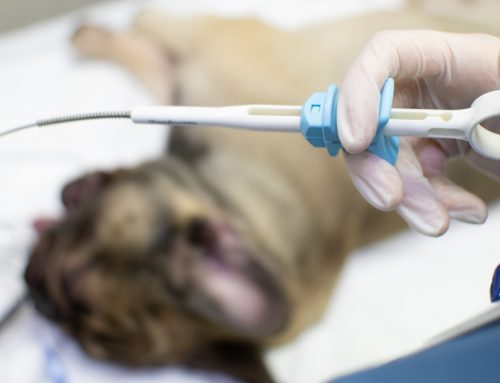
Bloodwork typically includes heartworm screening, since worms lodged in the vessels of the heart and lungs can drive the coughing and exercise intolerance that masquerade as other airway problems. Chest X-rays do much of the heavy lifting, and we can take them during the same visit rather than sending a pet who’s already working to breathe somewhere else first. When a case stays murky, we can add ultrasound or bronchoscopy with our visiting internal medicine specialist. We explain what each finding means as we go, so you always know why the next step matters.
How Are Breathing Problems in Pets Treated?
Treatment always follows the cause, so the plan for a wheezing asthmatic cat looks nothing like the plan for a dog in heart failure or a pet with something stuck in the nose.
- Medications: Anti-inflammatories calm swollen airways, bronchodilators open them back up, antibiotics clear bacterial infections, and inhaled therapies deliver medicine straight to the lungs for conditions like feline asthma.
- Allergy management: When pollen, dust, or smoke keeps setting off the airways, limiting exposure and calming the inflammation can keep the flare-ups from coming back. Austin’s cedar season fills winter air with juniper pollen, and sensitive pets can feel it too.
- Procedures: Some problems need hands-on fixes, from airway surgery for severe brachycephalic obstruction to removing a lodged foreign object or draining fluid that’s built up around the lungs.
- Hospitalization: An unstable pet may need oxygen support and IV medications until breathing steadies, and if your pet needs that level of care, we’ll arrange a referral to the right specialty or emergency hospital.
Prevention does real work here too. Staying current on routine wellness exams means we catch a heart murmur or an early cough before it becomes a crisis. Keeping up with core vaccinations and parasite control heads off several of the infections and heartworm cases that land pets in respiratory trouble.
Frequently Asked Questions About Pet Breathing Problems
How do I count my pet’s resting breathing rate at home?
Wait until your pet’s asleep or lying quietly, then count each rise and fall of the chest as one breath for 30 seconds, and double the number. Try it a few times when your pet is healthy so you know their normal. A rate that trends upward is worth a call even if your pet seems otherwise fine.
Is it normal for my flat-faced dog to snore and snort?
Some snoring and snorting is common in brachycephalic breeds because their shortened airways move air less freely, so a bit of noise at rest is often just how they’re built. What isn’t normal is noise that’s getting louder over time, gasping during sleep, gums that turn blue with excitement or heat, or a dog who overheats and struggles after light activity. Those point toward brachycephalic obstructive airway syndrome and deserve an exam. Keeping these dogs lean and cool goes a long way.
My cat is breathing fast but seems fine otherwise. Should I wait?
Fast breathing in a cat who otherwise seems okay is still worth taking seriously, because cats are experts at hiding illness until they can’t anymore. Feline asthma and heart disease both tend to show up as a rising resting breath rate long before a cat acts sick. If the rate stays above 30 at rest, or you see any open-mouth breathing, don’t wait it out. Call us the same day so we can take a look.
Getting Your Pet Seen When Breathing Changes
Breathing changes run the whole range from a harmless snort to a genuine emergency, and the difference often comes down to noticing the pattern early and acting before a bad night turns into a crisis. Counting resting breaths, listening to the sound, and trusting your gut when something feels off are the habits that catch trouble in time.
When your pet’s breathing worries you, our team at Oliver Animal Hospital offers Austin families same-day appointments and clear answers about what comes next. Don’t wait on breathing that’s getting worse; reach out to us right away, and for anything that can wait, we’re glad to see your pet for a full evaluation.





Leave A Comment