

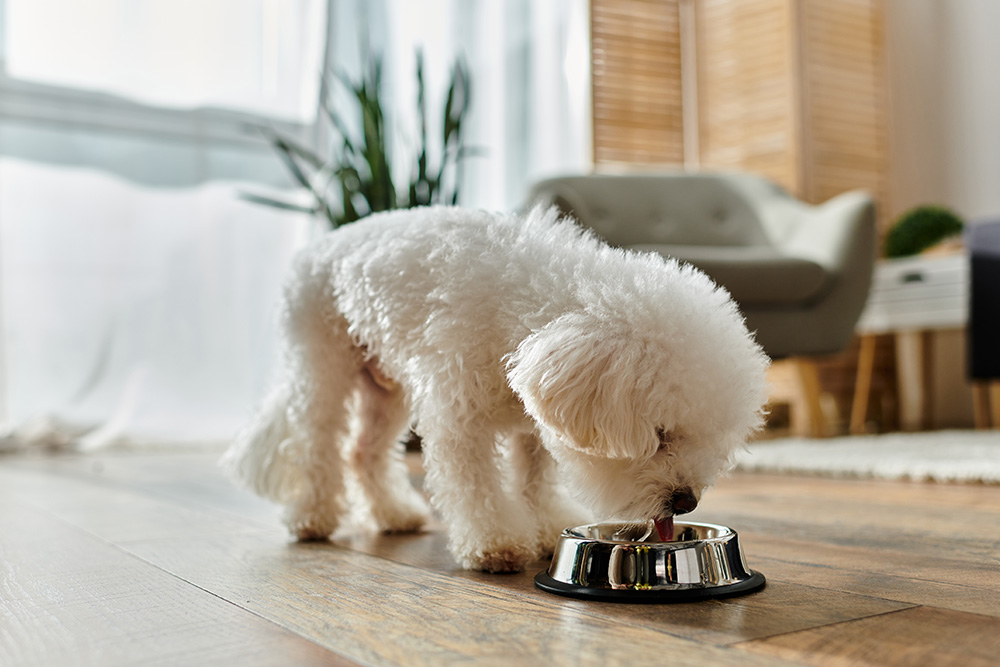
How Much Should You Actually Be Feeding Your Pet?
The feeding instructions on the back of the bag are a starting point, not a prescription. They’re calculated for an “average” pet of a given weight, and average covers a remarkably wide range of body types, activity levels, metabolic rates, and life stages. If you’ve ever followed the label exactly and ended up with a pet who gained too much, lost too much, or looked at you like you’d shorted them, you’ve run into the problem firsthand. Feeding the right amount is more nuanced than it looks, and a basic calorie calculation tailored to your individual pet makes a real difference.
At Oliver Animal Hospital in Austin, we treat nutrition as a clinical matter, not an afterthought. Our wellness care includes nutritional counseling for pets at every life stage, from puppy and kitten growth through senior maintenance. Request an appointment any time you’d like to talk through your pet’s feeding plan with someone who can run real numbers and look at your pet, not just an average.
Key Takeaways
- Bag-recommended portions are averages; your individual pet’s calorie needs depend on age, activity, neuter status, breed, body condition, and overall health.
- Body Condition Scoring on a 1-to-9 scale gives a fuller picture of weight status than the scale alone, and you can check it at home in about a minute.
- Treats and table extras are the most common reason carefully measured plans fail; reserving 10 percent of daily calories for treats keeps the math honest.
- Sudden weight changes or stalled progress despite proper portions often signal an underlying medical issue worth investigating.
Why does calorie counting matter for your pet?
Calorie counting matters because small daily overages compound into big problems over time. A 25-pound dog needing roughly 700 calories per day will gradually gain weight on 800 daily calories. That extra 100 calories is the difference between a single training treat and an extra quarter-cup of kibble, totaling 5 to 10 pounds of gain in a single year.
How much to feed any individual pet involves more than reading the bag. Calories alone don’t tell the whole story. Protein supports lean muscle and helps your pet feel full. Fat is calorie-dense, more than twice the calories per gram of protein or carbohydrate, and influences satiety. Fiber slows digestion and helps your pet feel satisfied on fewer calories. Beyond the macronutrient mix, accurate feeding requirements account for several factors specific to your pet:
- Age and life stage: puppies and kittens need more calories per pound than adults; seniors often need less
- Activity level: a working dog or one regularly running Lady Bird Lake trails may need 50 percent more calories than a couch-loving counterpart of the same size
- Breed-specific tendencies: some breeds are genetically prone to weight gain
- Body condition: the goal is healthy body composition, not necessarily current weight
- Health conditions: kidney disease, diabetes, and other diagnoses change nutritional priorities
- Treat habits: more on those further down
Our nutritional counseling factors all of these into a real-world plan that fits your specific pet, not a generic recommendation off the bag.
How does body condition scoring work?
Body Condition Scoring is a 1-to-9 scale veterinarians use alongside weight to assess fat distribution and muscle mass. The number on the scale only tells part of the story. Two dogs both weighing 60 pounds can have entirely different body compositions, one carrying healthy lean muscle and one carrying substantial body fat. BCS captures what weight alone misses.
Muscle matters separately from fat. Your pet can be overweight in body fat and undernourished in muscle at the same time. Both deserve attention, especially in seniors.
Here’s a quick way to check body condition at home:
- Look from above. A healthy pet has a visible waist that narrows behind the rib cage when viewed from above.
- Look from the side. There should be a tuck behind the rib cage, with the abdomen rising upward toward the rear legs (especially noticeable in dogs).
- Use your hands. Gently feel the rib cage. Ribs should be palpable with light pressure, similar to feeling the back of your hand. If you can’t feel them at all, your pet is overweight. If they protrude visibly, your pet may be underweight.
The standard Body Condition Scoring chart breaks down like this:
| BCS | Description | What you feel |
|---|---|---|
| 1-3 | Underweight | Ribs, spine, and hip bones easily visible; little or no fat coverage |
| 4-5 | Ideal | Visible waist; ribs felt with light pressure; tucked abdomen |
| 6-7 | Overweight | Difficulty feeling ribs; less visible waist; abdominal padding |
| 8-9 | Obese | Cannot feel ribs; no waist; obvious fat deposits |
Check monthly, especially for pets with thick coats. Fluffy fur hides surprising amounts of weight change.
How do you use pet calorie calculators correctly?
Online calorie calculators are useful starting points, not final answers. They estimate average needs from weight, life stage, and activity level, but they can’t account for individual metabolism, specific health conditions, or treats and extras you may not be tracking. Treat the calculator output as your baseline and adjust from there.
To use one effectively:
- Gather your information. Note current weight, an honest body condition score, and the calories per cup of your pet’s food (check the bag or manufacturer website).
- Run the numbers. Use the calculator to find total daily calories based on your pet’s information.
- Choose your target. Decide whether to feed for current weight maintenance or for a target weight if weight loss is the goal.
- Reserve treat calories. Set aside 10 percent of total daily calories for treats. No more.
- Convert to a portion. Divide the remaining calories by the calories-per-cup figure to get an actual feeding amount.
- Reevaluate. Check progress every 4 to 6 weeks and adjust based on weight changes and body condition.
Calorie needs shift with seasons, exercise levels, age, and health status. Austin’s brutal summer heat keeps a lot of pets less active for several months a year, which means a target that worked in February may need a tweak by July. Pet obesity prevention is an ongoing process, not a one-time calculation. We adjust target numbers and translate them into real-world food choices during wellness visits, particularly for pets actively working on weight management.
What’s secretly adding calories to your pet’s diet?
Treats and extras are usually the culprit. The problem isn’t intentional overfeeding; it’s the cumulative effect of small additions that don’t seem like much individually. One large dental chew, a slice of cheese, and a few bites of leftover chicken can easily total a third of a small dog’s daily allowance before you’ve measured a single cup of food.
A few common offenders, with rough calorie estimates:
| Treat | Approximate calories |
|---|---|
| One large dental chew | 70-100 |
| One slice of cheese | 70-110 |
| A few pieces of leftover chicken | 50-100 |
| One peanut butter Kong session | 100-200 |
| One large biscuit | 100-130 |
| Small piece of bacon | 40-50 |
For a 15-pound dog needing roughly 350 calories a day, two dental chews and a slice of cheese eat up nearly half the daily allowance. Calories in treats routinely run higher than most people realize.
Hidden calorie sources beyond the obvious treats include:
- Training treats: add up faster than you’d think over a single session
- Table scraps: including leftovers and the “just a little something” handouts
- Dental chews: marketed as good for teeth, but most are calorie-dense
- Multiple feeders: household members giving treats without coordinating
- Dropped food your pet is allowed to eat: counts toward the daily total
Lower-calorie swaps still feel like treats to your pet. Baby carrots, green beans, cucumber slices, and frozen blueberries deliver crunch and novelty for almost no calories. Small pieces of plain cooked chicken or turkey breast satisfy the meaty-treat impulse. A few pieces of kibble pulled from the daily allowance, handed over with the same fanfare as a “real” treat, produce the same wagging tail. Pets respond to the connection and the reward, not the calorie count.
How do you keep treats from blowing the daily count?
Pre-measure your pet’s full daily food allowance into a container each morning, then use food from that container as treats throughout the day. Whatever’s left at the end of the day goes into the evening bowl. This visible daily limit prevents overages, simplifies the math on each individual treat, and works whether one person feeds or several family members give treats.
To put it into practice:
- Measure once. Each morning, portion the entire day’s food into a labeled container on the counter.
- Treat from the container. Use kibble from the day’s portion as your treat supply, instead of adding extras on top of meals.
- Empty into the bowl. Whatever remains goes into the evening meal.
For training-heavy days or special occasions, pre-measure a small separate portion of high-value treats and subtract those calories from the main container. Same principle, just one extra step.
When should weight changes prompt a medical workup?
Sudden, unexplained weight loss or gain, weight changes paired with appetite shifts, or weight that won’t budge despite proper portion control all warrant a veterinary evaluation. Several conditions affect appetite and metabolism, and ruling these in or out before adjusting food alone can save weeks of frustration and protect against more serious problems.
Conditions that commonly mimic or worsen weight changes include:
- Thyroid disorders: hypothyroidism in dogs causes weight gain; hyperthyroidism in cats causes weight loss
- Metabolic disease: diabetes, Cushing’s disease, kidney disease, and others alter weight patterns
- Chronic pain or arthritis: reduces activity and contributes to gain
- Dental discomfort: can quietly suppress eating in some pets
- Digestive issues: IBD and others affect nutrient absorption
- Cancer: often produces weight loss before other symptoms appear
Why cats need extra caution with weight loss
Weight loss for cats is one of the few situations where slower really is better. Cats who lose weight too quickly can develop hepatic lipidosis, a potentially life-threatening liver condition where fat accumulates in the liver during periods of low food intake. Slow, steady loss of no more than 1 to 2 percent of body weight per week is the goal, and any cat refusing food for more than a day or two needs prompt evaluation. We’re available for emergency care during hospital hours if you’re worried.
Why pain management matters for weight
A pet hesitant to walk because of joint pain often becomes more active, and easier to keep at a healthy weight, once the pain is properly addressed. Comfortable movement supports healthy metabolism in a way that diet alone can’t replicate.
Health risks tied to excess weight
Carrying extra weight raises the risk of several serious conditions, including diabetes mellitus (particularly in cats), urinary stones, joint disease and osteoarthritis, intervertebral disc disease, systemic hypertension, and increased heat stroke susceptibility (a real concern for any Austin pet during a 100-degree summer). Excess weight also shaves years off the average lifespan. We see and treat many of these common diseases regularly, and our veterinary care services include the diagnostic workup needed to identify or rule out underlying contributors.
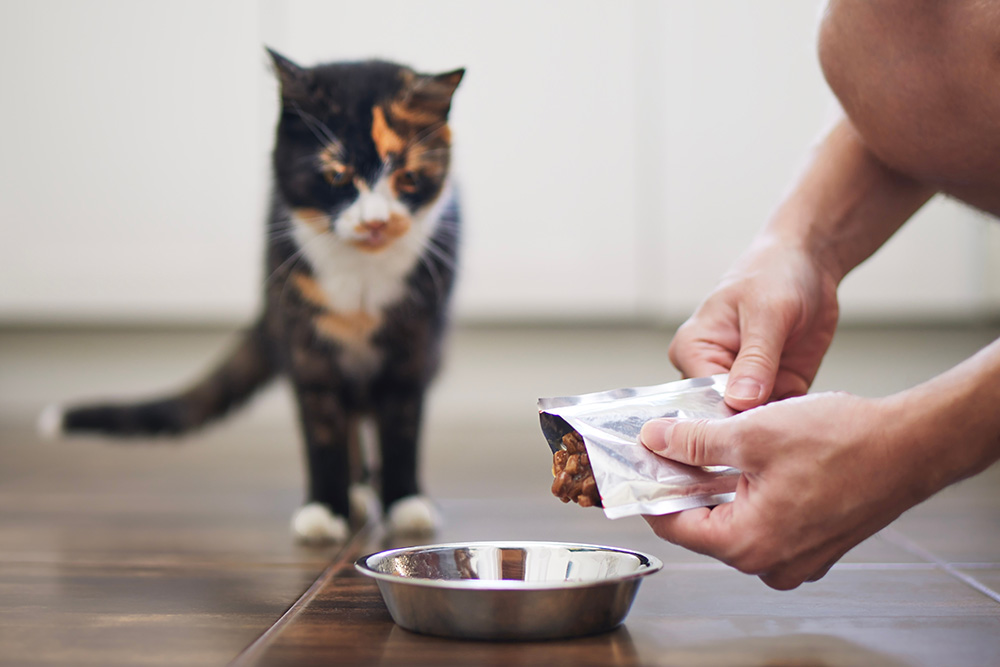
How do you build a feeding plan that actually lasts?
A lasting plan evolves with your pet. Schedule annual nutrition reviews for adult pets and twice-yearly reviews for seniors, and adjust portions whenever activity, life stage, or health status changes. Pair gradual diet transitions with enrichment-based feeding, regular body condition checks, and prescription weight-loss diets when warranted for steady, sustainable progress.
Prescription weight loss diets
Not all weight-loss diets are created equal. Prescription options undergo feeding trials and are formulated specifically for safe, effective weight reduction. They preserve lean muscle while supporting fat loss, use specific protein-to-calorie ratios designed for weight management, contain nutrients that support fat metabolism, include controlled fiber levels to help your pet feel satisfied on fewer calories, and provide complete, balanced nutrition at reduced calorie levels. Over-the-counter “diet” or “weight control” foods often don’t deliver the same results.
Our pharmacy carries dog weight management diets and cat weight management diets for pets needing structured weight reduction.
Enrichment-based feeding strategies
Feeding can be enrichment when designed thoughtfully. For dogs, weight loss strategies often combine portion control with mealtime engagement: puzzle feeders that release kibble as your dog works at them, slow bowls that prevent gulping and extend mealtime, scatter feeding in the yard for natural foraging, snuffle mats for hidden food searching, and multiple small meals spread through the day.
For cats, the strategies tap into natural hunting instincts: food puzzles that require manipulation to release food, small frequent meals throughout the day, hidden food in safe locations around the home, treat-dispensing toys that move when batted, and food scattered along a route the cat can patrol. Combining gradual calorie reduction with increased activity and mental engagement supports lasting results that simple dieting alone often can’t.
Frequently asked questions about pet feeding
How quickly should my pet lose weight?
Slow and steady. The general target is 1 to 2 percent of body weight per week. A 50-pound dog should lose half a pound to a pound per week. A 12-pound cat should lose 2 to 4 ounces per week. Faster loss can cause health problems, particularly in cats.
My pet always seems hungry. How do I deal with the begging?
Begging is rarely about hunger; it’s about the connection and the reward. Try mealtime enrichment, scheduled treat times, or substituting low-calorie treats. Pets who get the same engagement at lower calorie cost usually adjust within a couple of weeks.
Should I weigh my pet’s food or use a measuring cup?
A kitchen scale is dramatically more accurate. The same “cup” of kibble can vary by 30 percent depending on how it’s scooped. For pets on weight management, a scale provides the precision that makes the difference between progress and a plateau.
How long does it take to see results from a feeding change?
Body condition changes often appear within 4 to 8 weeks of correct portioning. Energy and behavior shifts can show up within 2 to 4 weeks. Weight on the scale moves more slowly, especially as muscle replaces fat, so don’t lose heart if the number changes more gradually than the look and feel of your pet.
Right-Sized Meals for Your Austin Pet
A healthy body condition pays back over years: easier movement, fewer health risks, and more good days together. Saying no to the begging is hard, especially when your pet looks at you like you’ve forgotten what love is. The good news is that small changes add up fast, and pets adjust to new patterns more quickly than most people expect.
You don’t have to figure it out alone. Our team at Oliver Animal Hospital is ready to help set realistic goals, choose the right food, and create a feeding plan that fits your specific pet and household. Reach out any time with questions, or schedule a thorough nutritional evaluation when you’re ready to dial things in.







Leave A Comment