

Congestive Heart Failure in Pets: What You Should Watch For at Home
Congestive heart failure, or CHF (a condition where the heart can no longer pump blood efficiently enough to meet the body’s needs, causing fluid to build up in the lungs or abdomen), is one of the most common serious diagnoses in older dogs and cats. The word “failure” sounds final, but the reality is that many pets live comfortably for months or even years after a CHF diagnosis with the right combination of medication, monitoring, and home care. The key is knowing what to watch for so you can catch changes early, before they become emergencies.
At Oliver Animal Hospital, we work with families managing heart failure regularly, and we know how stressful it can be to feel like you are constantly watching for something to go wrong. Our diagnostic services include digital radiography and ultrasonography that help us monitor heart function over time, and our team is always available to talk through what you are seeing at home. If your pet has been diagnosed with CHF or you are concerned about symptoms like coughing, rapid breathing, or reduced energy, call us at (512) 892-1000 or request an appointment so we can evaluate where things stand.
What Is Congestive Heart Failure in Dogs and Cats?
Congestive heart failure is not a single disease but the end result of any cardiac condition that reduces pumping efficiency to the point where the body cannot compensate. As the heart falls behind, fluid backs up: into the lungs (causing respiratory symptoms) or into the abdomen (causing bloating and weight gain). The congestion is what drives most of the symptoms you observe at home.
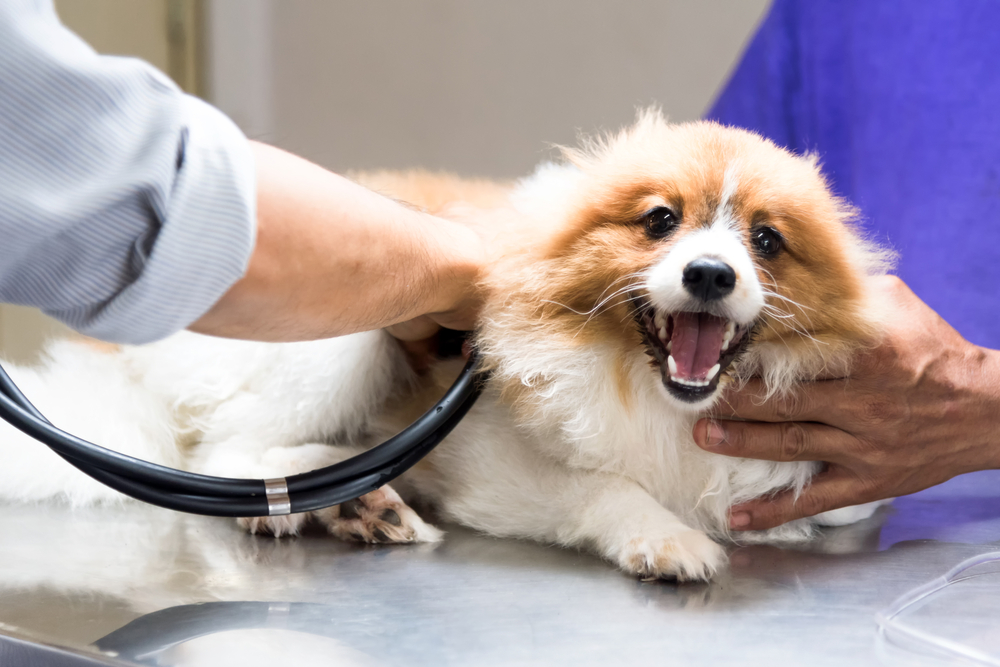
Congestive heart failure develops in two stages. During the compensated phase, signs of heart disease may be present for months or years while the heart works harder to maintain normal output. Medications like pimobendan can slow progression significantly during this window. Eventually, compensation reaches its limit and failure develops. Heart disease diagnosis at an early stage, before failure, is what gives families the most options and the most time. This is why routine physical examinations with careful cardiac auscultation matter even when pets appear healthy.
What Causes Congestive Heart Failure in Pets?
CHF is the downstream result of any heart condition that weakens or stresses the heart over time. The specific underlying cause determines which medications are selected and what monitoring needs to be consistent.
Common Underlying Conditions
In Dogs
Mitral valve disease is the most common cause, accounting for the majority of heart failure in small and medium breeds. The mitral valve thickens and becomes leaky over time, allowing blood to flow backward with each heartbeat. Cavalier King Charles Spaniels, Dachshunds, Miniature Poodles, and Chihuahuas are among the most affected breeds. Dilated cardiomyopathy affects large breeds primarily, where the heart muscle weakens and the chambers enlarge. Arrhythmias in dogs can also drive or complicate heart failure.
In Cats
Hypertrophic cardiomyopathy is the most common feline cardiac condition, where the heart muscle wall thickens and the chambers become rigid. Cardiac arrhythmias in cats are common, particularly with hypertrophic cardiomyopathy. Breed-specific health risks for cardiac disease are well documented: Maine Coons and Ragdolls have specific genetic mutations associated with hypertrophic cardiomyopathy.
Congenital Defects
Some pets are born with structural heart problems. Congenital heart disorders vary widely in severity. Patent ductus arteriosus, where a blood vessel that should close after birth remains open, is one of the more surgically correctable forms when identified early.
Conditions That Strain the Heart From Outside
CHF can also result from conditions originating outside the heart itself. Hyperthyroidism in cats substantially increases the heart’s workload, and treating it is an important component of cardiac management in affected cats. Systemic hypertension puts chronic pressure on blood vessels and the heart. Hemangiosarcoma, a cancer of blood vessel cells, can involve the heart directly and trigger sudden cardiac crisis.
What Warning Signs Should I Watch for at Home?
Because you know your pet’s baseline better than anyone, you are uniquely positioned to notice early changes. Organizing signs by urgency helps you know how quickly to respond.
Early Signs: Schedule a Visit Within a Few Days
- A soft, occasional cough, often at night or when first lying down
- Reduced exercise tolerance: needing to rest sooner during walks, lagging behind on routes they used to manage easily
- Sleeping more than usual or seeming less engaged with daily activity
- Reduced appetite
In cats, panting is always abnormal. Any cat who is breathing open-mouthed or panting warrants same-day evaluation.
Austin’s summer heat deserves specific mention: high temperatures and humidity increase cardiovascular demand. Pets with known heart disease should avoid prolonged outdoor exposure in the heat, and worsening symptoms in summer months may have an environmental component.
Concerning Signs: Contact Us Today
- Cough that is more frequent, more productive, or now accompanied by white or pink-tinged discharge
- Resting breathing rate consistently above 30 to 35 breaths per minute
- Visible abdominal swelling
- Significantly reduced appetite lasting more than 24 hours
Emergency Signs: Act Immediately
- Respiratory distress: labored breathing with visible neck and belly effort, extended posture, open-mouth breathing
- Blue, gray, or very pale gums
- Syncope: collapse or fainting
- Sudden hindlimb weakness or paralysis in cats (possible saddle thrombus; covered below)
For emergencies outside our open hours, please go directly to the nearest 24-hour emergency facility. While we’re open, please call ahead so we can give you guidance.
How Is Heart Failure Diagnosed?
Accurate diagnosis requires imaging and testing, not just listening to the heart. Several tools work together to build the full picture.
An echocardiogram is the most informative cardiac test, using ultrasound to visualize the heart in motion: chamber size, wall thickness, valve function, and pumping efficiency. This determines which medications are appropriate and how urgently treatment is needed. An electrocardiogram records the heart’s electrical activity and identifies arrhythmias. Chest radiographs show fluid in the lungs and heart size changes. Bloodwork assesses kidney and liver function before medications are started or adjusted.
Preventive testing for senior pets and predisposed breeds catches problems before symptoms develop, when the treatment window is widest. ProBNP testing is a blood marker that rises with cardiac stress and provides early warning of developing disease. Our wellness care program incorporates cardiac screening as a standard component for older pets.
What Happens After a CHF Diagnosis?
Stabilization First
The immediate goal when CHF is first diagnosed, or during a decompensation event, is making your pet comfortable and breathing easily. Treatment for CHF focuses first on removing fluid from the lungs with diuretics, supporting heart function with appropriate medications, and reducing stress. Most pets respond quickly: breathing becomes easier, coughing reduces, and energy improves within hours to a few days of starting treatment.
Long-Term Medication Management
Most cardiac patients are on a combination of medications that address different aspects of heart failure simultaneously. The typical combination includes a diuretic to prevent fluid buildup, pimobendan to improve cardiac efficiency, and often an ACE inhibitor to reduce vascular resistance. As disease progresses, doses are adjusted and additional medications may be added.
| Medication Type | Role | Common Examples |
| Diuretic | Removes fluid from lungs and abdomen | Furosemide (Lasix), spironolactone |
| Positive inotrope / vasodilator | Strengthens heart contractions; relaxes vessels | Pimobendan (Vetmedin) |
| ACE inhibitor | Reduces vascular resistance; slows fluid retention | Enalapril, benazepril |
| Beta-blocker | Slows heart rate in specific conditions | Atenolol |
The goal is always the minimum that maintains comfort and stability. Doses are adjusted based on your pet’s response and monitoring results.
Home Monitoring: The Most Valuable Thing You Can Do
Counting resting respiratory rate:
Monitor your pet’s resting respiratory rate daily while they are asleep or deeply relaxed. Count the number of times the chest rises in 30 seconds and multiply by two.
| Resting Rate (breaths/min) | What It Means | Action |
| Under 30 | Reassuring; medication maintaining stability | Continue monitoring |
| 30 to 40 | Trending up; monitor closely | Notify us if it stays elevated |
| Over 40 | Fluid may be accumulating | Contact us the same day |
Track the number daily in a simple log or phone note. The trend over days matters as much as any single reading.
Additional daily observations:
- Appetite level and what your pet ate
- Energy and engagement with family
- Cough frequency and character
- Abdominal appearance
Medication tips:
Use a pill organizer to track daily doses. Set a phone alarm for consistent medication timing. Keep a two-week supply refill threshold so you never run low unexpectedly.
Warning: Saddle Thrombus in Cats
Saddle thrombus is a blood clot that lodges at the aortic bifurcation, cutting off blood flow to the hindlimbs. It occurs suddenly and is most common in cats with underlying heart disease. Signs include sudden paralysis or weakness of one or both back legs, cold limbs, crying out in pain, and rapid breathing. This is an emergency requiring immediate care.
What Is the Outlook for a Pet With CHF?
Many pets with CHF live comfortably for one to three years or more after diagnosis when medications are started at the right time and adjusted consistently. The quality of that time is often very good. Pets who are well-managed spend the vast majority of their remaining life doing the things they enjoy, not suffering.
What makes the difference is consistent medication, attentive home monitoring, and regular rechecks that allow early adjustment before decompensation develops. Each relationship between a family and their cardiac patient is different, and we adjust plans based on your pet’s individual response and your daily reality.
How Do I Manage a Pet With CHF at Home Day-to-Day?
Environment and comfort:
- Keep a small health notebook or phone note to track daily respiratory rate, appetite, and energy
- Choose a calm, comfortable sleeping spot where breathing is easy
- Keep the home cool, particularly in Austin summers
- Avoid environmental stressors like excessive excitement or extreme heat exposure
Activity:
- Short, gentle activity is generally better than no activity
- Let your pet set the pace rather than encouraging them to keep up
- Avoid high-intensity play that spikes heart rate
Planning ahead:
Heart disease involves ongoing medication, periodic imaging, and rechecks. Pet insurance enrolled before diagnosis can be valuable for breeds at elevated cardiac risk. Discussing realistic costs early helps ensure consistent care is maintained throughout your pet’s life.
Frequently Asked Questions
What is the difference between heart disease and heart failure?
Heart disease refers to any structural or functional abnormality of the heart, which can be present for months or years without causing symptoms. Heart failure occurs when the heart can no longer compensate, and fluid begins accumulating in the lungs or abdomen. Not all pets with heart disease develop failure, and early diagnosis dramatically improves the ability to delay that progression.
How do I count the resting respiratory rate correctly?
With your pet sleeping or deeply relaxed, count the number of times the chest rises in 30 seconds and multiply by two. Take the reading at the same time each day, before meals or activity, for the most consistent comparison. A rate that is creeping upward over days is more significant than a single elevated reading.
My pet’s breathing looks fine. Do I still need to count?
Yes. Counting catches early changes before visible laboring begins. A rate that was 22 last week and is now 34 is significant even when your pet looks comfortable on the surface. This is one of the few tools you have for detecting decompensation before it becomes a crisis.
How long will my pet be on cardiac medications?
Once started, cardiac medications are lifelong. Stopping them causes rapid decompensation. The goal is the minimum effective dose adjusted over time, not discontinuation.
How often does my pet need recheck appointments?
Newly diagnosed or recently adjusted cardiac patients are typically rechecked within one to four weeks to assess medication response. Once stable, every three to six months is standard, with bloodwork to monitor kidney function and electrolytes. Any change in observed symptoms warrants a call before the scheduled recheck.
When should I call versus come in immediately?
Call us at (512) 892-1000 if resting respiratory rate is above 40, appetite has been poor for more than 24 hours, coughing has worsened, or you are worried about anything you are seeing. Come in immediately or go to an emergency facility for breathing distress, blue or pale gums, collapse, or sudden hindlimb weakness in a cat.
Long-Term Partnership in Cardiac Care
Heart failure is not a crisis to manage alone, and it should not feel that way. Oliver Animal Hospital is committed to being a resource throughout the process: explaining what medications do, interpreting the numbers you track at home, and adjusting plans before problems escalate. You are the most important part of your pet’s cardiac care team because you are the one watching them every day.
Contact us at (512) 892-1000 or request an appointment if you have questions about what you are observing, want to schedule a cardiac recheck, or are starting to wonder whether it might be time for a quality-of-life conversation.






Leave A Comment