

When a lymph node is enlarged, your pet’s body is flagging that the immune system has been called to work somewhere nearby. The trigger could be as ordinary as a bad tooth, a skin infection, or an allergic flare, or as serious as tick-borne disease or lymphoma. Some causes fade on their own, others need targeted treatment, and a few are the kind you want caught early. The only reliable way to tell which category you are dealing with is to look at what is inside the node, not just what you feel from the outside.
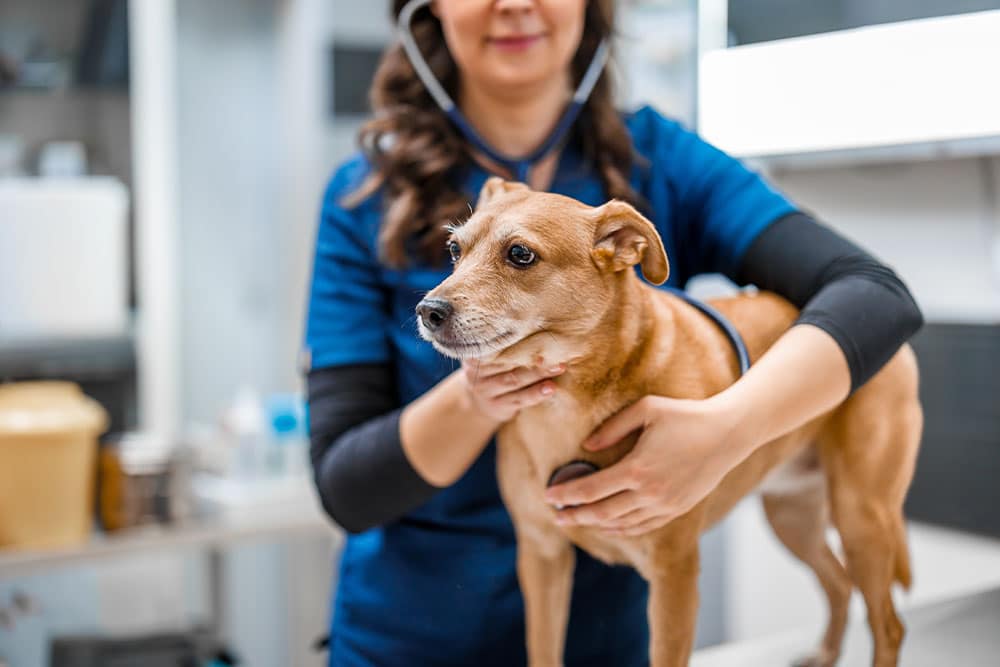
At Oliver Animal Hospital in Austin, we work up an enlarged node with a hands-on exam, in-house bloodwork, and cytology to see the cells directly. When further workup is needed, we use in-house x-ray, bloodwork, and parasite testing to check how your pet’s body is functioning from the inside out, and we can bring in a mobile specialist for ultrasound, endoscopy, bronchoscopy, and biopsies for a deeper look without having to travel to a referral center. We walk your family through every result so the plan feels understood rather than handed down. If you have felt a new swelling on your pet, schedule a visit and we will get you in quickly.
The Short Version For Enlarged Lymph Nodes
- An enlarged lymph node is a signal, not a diagnosis, and it can point to anything from a minor infection to lymphoma, so the cause matters more than the size.
- The pattern of swelling gives us real information before any test: one puffy node near a wound reads very differently than several firm nodes scattered across the body.
- Cytology and, when needed, a biopsy are how we see the actual cells, which is the only way to sort a reactive node from a cancerous one.
- Most swollen nodes turn out to be treatable, and catching a serious cause early usually means more options stay on the table.
Is This a Now Problem or a This-Week Problem?
Urgency depends on what else is happening, and it helps to sort the situation into three tiers. Most swollen nodes are not a middle-of-the-night emergency, but a few situations are, and knowing the difference keeps you from either panicking or waiting too long.
- Same-day emergency: swollen nodes in the throat that make breathing or swallowing difficult, collapse, pale or white gums, or a pet who is suddenly very weak. These need emergency and urgent care (available during our regular hours) or a trip to a 24/7 ER.
- Prompt evaluation within 48 hours: a firm node that is clearly enlarged, several nodes swelling at once, or swelling paired with lethargy, appetite loss, or fever.
- Schedule within the week: a single, mild, gradual change with a pet who is otherwise bright, eating, and acting normal, especially near an obvious cause like a healing wound.
When you are not sure which tier you are looking at, that uncertainty is itself a good reason to reach out. You can always call us with a triage question, and we will help you decide whether this is a today problem or a this-week one.
Which Everyday Habits Actually Head Off Node Trouble?
Not every cause is preventable, but a surprising number of the common infectious triggers are, and consistent preventive care is also the most reliable way to catch everything else early.
The everyday prevention that moves the needle:
- Stay current on vaccines: vaccinations that prevent many infectious triggers head off diseases like leptospirosis and, where appropriate, Lyme.
- Keep the mouth healthy: routine dental care that lowers chronic bacterial load reduces the low-grade infection that keeps the nodes around the jaw reactive.
- Stay consistent with parasite prevention: year-round flea, tick, and intestinal parasite control removes several of the most common reasons nodes flare.
- Check at-risk breeds early: Golden Retrievers and Boxers have higher incidences of lymphoma. Newer blood-based screening tests can catch lymphoma months before a single symptom shows up.
Regular wellness visits tie it all together. A node that has changed since last year is only meaningful if someone was tracking it, and that is exactly what routine exams are for.
What Are Lymph Nodes, and Where Do They Sit on Your Pet?
Lymph nodes are the immune system’s checkpoints, small filters set along a network of vessels throughout your pet’s body. When a node swells, it has usually ramped up immune cells to deal with something nearby, which is why size alone is a clue rather than an answer.
As lymph fluid drains through, these nodes trap bacteria, viruses, and other invaders so immune cells can inspect the catch and mount a response. Several of these nodes sit close enough to the skin that you can feel them at home. The lymph node locations you can feel at home sit under the jaw, in front of the shoulders, in the armpits, in the groin, and behind each knee. On a healthy pet these feel small, soft, and symmetrical from side to side, and knowing that baseline is what makes a change stand out later.
Feeling those nodes is also part of every visit. Lymph node palpation is routine at wellness exams, which is one of the quiet reasons regular checkups catch problems early. A node that has grown since last year is much easier to act on when we have a record of what normal looked like.
Where Does the Swelling Actually Come From?
Swollen nodes trace back to three broad buckets: infection or inflammation, cancer, and a smaller group of immune-mediated and reactive conditions. Even before testing, the pattern guides us. A single swollen node often points to a local problem, while many enlarged at once suggests something systemic.
The specifics fill in the picture. A local problem draining into one node might be an abscessed tooth or a cut on the paw. Firm, painless, rapidly growing nodes raise more concern than a warm, tender, softer node beside an obvious wound. None of this replaces testing, but it helps us prioritize.
When Infection Is Behind a Reactive Node
Infections are among the most common reasons nodes enlarge, and they come from every category of organism: bacteria, viruses, fungi, and parasites. A local infection like a bite wound usually reacts in just the nearest node, while a systemic one lights up nodes throughout the body.
The infectious triggers worth knowing:
- Tick-borne: Lyme disease, ehrlichia, and anaplasma can inflame nodes across the body long after the tick is gone.
- Bacterial: Leptospirosis is often picked up from standing water and settles into a systemic infection.
- Bacterial in cats: Mycobacteriosis is a less common but possible cause of node changes in cats.
- Fungal: Here in the Southwest, dogs breathe in the soil spores that cause Valley Fever, while blastomycosis, histoplasmosis, and aspergillosis round out the fungal culprits; these tend to travel from the lungs outward.
- Feline aspergillosis: Aspergillosis can also settle into the nasal passages and nearby tissues in cats.
- Feline viruses: Feline leukemia reshapes the immune system in ways that show up in the nodes.
- Feline immunodeficiency: The immunodeficiency virus (FIV) leaves a cat’s defenses altered enough that the nodes stay reactive.
- Parasites: Toxoplasmosis keeps nearby nodes reactive as the immune system responds to the parasite.
- Intestinal parasites: Intestinal parasites like giardia can drive a low-grade immune response the nodes reflect.
- External parasites: A heavy burden of external parasites like fleas, ticks, and mites keeps the skin and its draining nodes irritated.
Where Cancer Fits Into the Picture
Cancer is the cause pet families worry about most, and lymphoma is the one that most often turns up as swollen nodes. Canine lymphoma is one of the most common reasons a dog develops sudden, dramatic swelling while still eating, playing, and acting entirely like themselves. That mismatch, a very sick-looking set of nodes on a dog who feels fine, is exactly why it catches families off guard.
Lymphoma is more common than many people expect: roughly 1 in 15 dogs, and about 1 in 8 Golden Retrievers, will develop it. Diagnosis and subtype shape the entire treatment and prognosis conversation, so accurate early testing genuinely changes what comes next.
Cats get lymphoma too, but it behaves differently. Feline lymphoma tends to settle in the gastrointestinal tract rather than the nodes you can feel, so it often shows up as weight loss or vomiting instead of a visible lump. And lymphoma is not the only cancer that involves nodes; several other cancers can spread into them, which is another reason we look at the cells rather than guessing.
The Allergy, Immune, and Miscellaneous Group
A handful of non-infectious, non-cancerous conditions round out the list, and they matter because they look identical to everything else from the surface. Immune-mediated hemolytic anemia is one, where the immune system attacks the body’s own red blood cells and the nodes react to the fallout. Chronic skin allergies can enlarge the nodes when constant scratching opens the door to secondary infections. Vaccination reactions can briefly swell a nearby node, and lymphedema, a backup of lymph fluid, can make a limb and its nodes look enlarged. A node cannot tell you which bucket it belongs to by feel alone, which is why the workup matters.
From Fingertips to Microscope: How We Pin Down the Cause
Diagnosis moves in order, from what we can feel to what we can see under a microscope, with each step deciding the next. We start with our hands and eyes, add a look at the cells, and then bring in bloodwork and imaging as the picture demands.
What the Hands-On Exam Reveals
The exam is where the plan takes shape. During palpation we assess a node’s size, texture, and consistency, whether the swelling is symmetrical side to side, whether it hurts, and whether it moves freely or feels anchored to the tissue beneath. A soft, tender, mobile node points one direction; a firm, painless, fixed one points another. That pattern, combined with the rest of the exam and your pet’s history, sets the urgency and tells us which test to reach for first.
The Needle Sample, and When Tissue Is the Only Answer
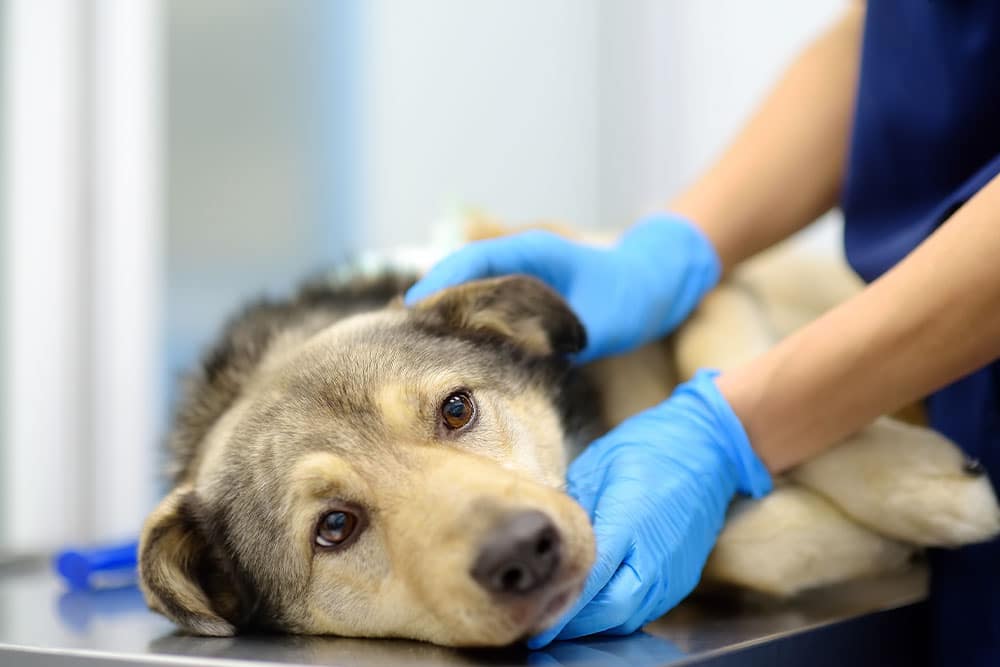
Fine-needle aspiration is almost always the first real diagnostic step, and it is far gentler than most families expect. A fine-needle aspiration collects a few cells with a small needle in minutes, usually without any sedation. Those cells go under the microscope, and cytology can often tell us whether we are looking at a reactive node, an infection, or something that looks like cancer.
Sometimes the cells answer everything. Other times we need architecture, not just individual cells, and that is where a biopsy comes in, removing a small piece of tissue to confirm a diagnosis or pin down the exact lymphoma subtype. When a deeper answer is needed, soft tissue surgery performed in-house lets us collect that sample here, and we bring in a mobile specialist for the biopsies that call for one.
The Role of Blood Panels, Tick Screens, and Imaging
Blood and imaging fill in the parts a node sample cannot. A complete blood count and chemistry panel screen for systemic infection, organ disease, and changes in the blood cells themselves, while tick-borne and infectious-organism testing look for specific culprits behind a systemic pattern. Running these in-house matters for timing, and our in-house laboratory with rapid results means we are not waiting days to make the next decision.
Imaging handles the nodes you cannot feel. Chest radiographs and abdominal ultrasound let us check internal nodes and look for organ changes, masses, or fluid that a surface exam would never reveal. When lymphoma is on the table, this staging step is not optional; how far the disease has spread guides both the treatment plan and the honest prognosis conversation that follows.
How Do You Treat a Swollen Lymph Node Once You Know the Cause?
Treatment always follows the diagnosis, never the other way around. The therapy is matched to the specific cause, whether that is an infection, an immune problem, or cancer. Once we know what we are treating, we map out the best plan for your pet in conversation with you.
Reaching for an antibiotic or a steroid before we know the cause is a fast way to land on the wrong medication, and an early steroid can even blur a lymphoma diagnosis.
| Underlying cause | General treatment direction |
| Local bacterial infection | Targeted antibiotics and care for the source, such as a dental problem or wound |
| Tick-borne disease | Specific antibiotics guided by testing, often with a good response |
| Fungal infection | Extended antifungal therapy, sometimes over several months |
| Immune-mediated disease | Medications that calm an overactive immune response |
| Lymphoma | Chemotherapy protocols aimed at remission, tailored to subtype and stage |
For lymphoma specifically, it helps to set expectations honestly up front. For most patients, the realistic goal is remission, a return to feeling well with the disease quieted, rather than a permanent cure. Many dogs tolerate chemotherapy far better than people expect, with a good quality of life during treatment. What that looks like varies from pet to pet, and we would rather have the honest conversation about what treatment means for your individual dog or cat than hand you a one-size-fits-all plan.
The One-Minute Monthly Feel-Around You Can Do at Home
A quick monthly check takes about a minute and gives you a baseline that makes any future change obvious. You are not trying to measure anything or judge whether a node is “the right size.” You are simply noticing whether anything feels different than it did last month.
Run your hands gently over the same five areas each time: under the jaw, in front of the shoulders, in the armpits, in the groin, and behind each knee. Feel for anything larger, firmer, or newly present compared with your last check, and compare left to right, since the two sides should feel roughly the same. If something stands out, that is the signal to call us. You do not need to be certain; you just need to notice the change and let us take it from there.
Questions Pet Families Ask Us About Swollen Lymph Nodes
My pet’s node is swollen but they seem totally fine. Can I wait?
Feeling well is reassuring, but it does not rule much out on its own. A single mildly enlarged node next to an obvious cause, like a healing scratch, can reasonably wait a week. Firm nodes, several at once, or anything that keeps growing deserves a prompt look even if your pet seems happy.
Does a swollen lymph node mean my pet has cancer?
No, and this is the fear we most want to ease. Most swollen nodes turn out to be reactive, responding to an infection, a dental problem, allergies, or a nearby wound, and many resolve with targeted treatment. Cancer is one possibility on a fairly long list. The only way to know which cause you are dealing with is to look at the cells, which is exactly what a fine-needle aspiration lets us do, usually in a single, quick visit.
Will my pet need to be sedated for the testing?
Usually not for the first step. A fine-needle aspiration uses a small needle and takes only minutes, and most pets tolerate it without sedation. If we need a full biopsy to confirm a diagnosis or nail down a lymphoma subtype, that involves removing a small piece of tissue and does require sedation or anesthesia. We always talk you through what a given test involves before we do it, so nothing comes as a surprise.
Trading the Worry for a Plan You Can Follow
The hardest part of finding a new swelling is rarely the swelling itself. It is the not knowing, the stretch of hours or days where your imagination fills the gap. A systematic workup closes that gap. Step by step, it turns “what is this?” into a real answer and a plan you can act on, and the earlier we start, the more options tend to remain open.
If you have felt something new on your dog or cat, you do not have to sit with the uncertainty. Oliver Animal Hospital provides same-day answers from our in-house diagnostics to get you moving quickly. Whenever you are ready, you can schedule an evaluation and we will look at it together and figure out what it means.



Leave A Comment