

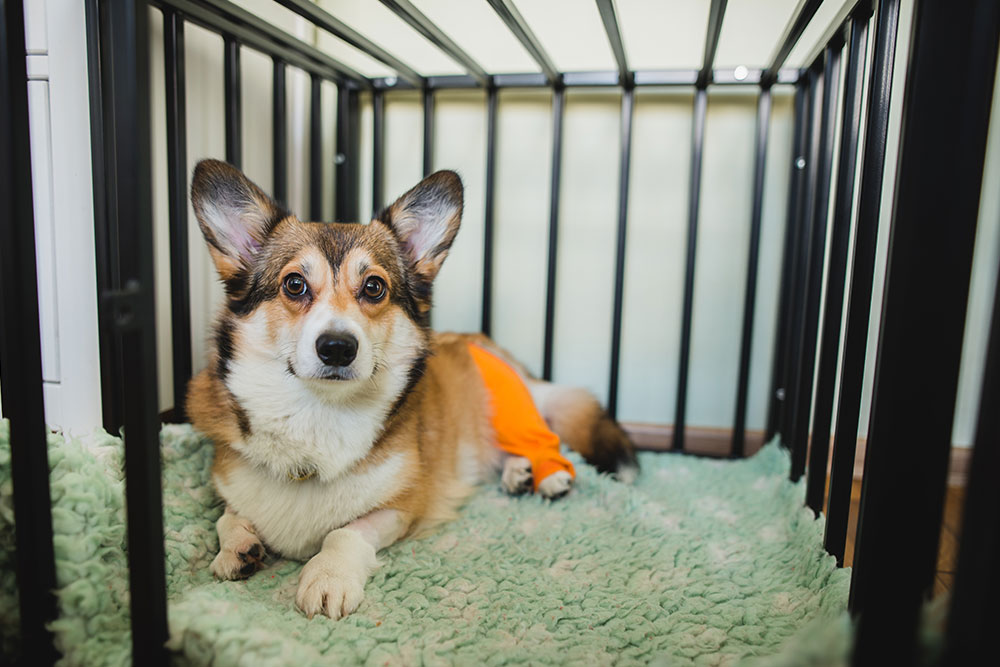
Not every torn cranial cruciate ligament needs surgery, but most do, and the exceptions are specific. For medium, large, and giant-breed dogs, surgery restores stable, comfortable function far more reliably than rest and medication, because the knee cannot restabilize on its own. Conservative management, meaning structured care without surgery, has a genuine place for very small dogs, dogs who cannot safely undergo anesthesia, and comfort-focused situations in older pets. The honest version is that conservative care is a real option for some dogs and a compromise for others, and knowing which group your dog falls into is what the decision comes down to.
Oliver Animal Hospital in Austin works through that question with families directly, weighing your dog’s size, age, activity, and overall health rather than defaulting to a single answer. Our orthopedic and diagnostic services confirm the injury and frame the realistic choices, and when surgery is the right path we refer to a trusted board-certified surgical partner. If your dog is limping on a hind leg, contact us and we will walk through the options together.
Surgery or Not: The Essentials
- Most medium and larger dogs do best with surgery, because the knee cannot stabilize itself after a CCL tear.
- Conservative management is reasonable for very small dogs, anesthesia-risk dogs, and comfort-focused care.
- Conservative care is real work: strict rest, weight loss, medication, rehabilitation, and time.
- For an active large dog, skipping surgery usually slows the problem rather than solving it, and ends in arthritis and pain.
Why Do Dogs Tear Their CCLs in the First Place?
This is the part that surprises most families. In humans, an ACL tear is usually a single bad moment, the kind of pivot or hard landing an athlete remembers. In dogs, the picture is different. The vast majority of canine CCL tears are degenerative, meaning the ligament has been quietly weakening for months or years before it finally fails during something as ordinary as jumping off the couch. The “what was she doing when it tore” question often has a disappointing answer: she was just being a dog.
The anatomy is part of the explanation. The top of a dog’s shin bone (the tibial plateau) has a steeper slope than the human equivalent, which means the CCL is under constant stress just to keep the joint aligned during normal weight-bearing. Over time, that stress wears the ligament down, and the steeper the slope, the higher the risk.
Several factors raise the odds of a tear:
- Breed. Labrador Retrievers, Rottweilers, Newfoundlands, Boxers, English Bulldogs, Mastiffs, American Staffordshire Terriers, and German Shepherds carry meaningfully higher rates than the average dog. Larger breeds in general are at higher risk, and a few small breeds (notably Bichons and some terriers) also show elevated rates.
- Weight. Excess body weight is one of the strongest risk factors. Every extra pound increases the load on the ligament with every step, and over time that wears it down. Overweight dogs tear CCLs at much higher rates than lean dogs of the same breed.
- Conformation. The angle of the stifle joint and the slope of the tibial plateau both affect how much shear force the ligament has to resist. Some dogs are simply built in a way that puts more daily strain on the CCL.
- Age. Most CCL tears happen in middle-aged dogs, typically between 4 and 10 years old, after the ligament has had time to degenerate.
- Existing knee problems. Dogs with patellar luxation, prior knee injuries, or chronic stifle inflammation are at higher risk because the joint is already not moving normally.
- Activity pattern. The “weekend warrior” dog who’s mostly sedentary during the week and then runs hard on Saturday tears CCLs at higher rates than dogs with steady moderate conditioning. Consistent activity protects the ligament; sporadic intense bursts stress it.
True acute injuries do happen. A dog slipping on ice, getting hit by a car, or landing badly off a high jump can tear an otherwise healthy ligament. But these cases are the minority, and even in dogs whose tear seems clearly traumatic, the ligament was often already partly compromised. This degenerative nature is also why dogs who tear one CCL frequently tear the other one within a year or two: the same factors that weakened the first ligament are usually still weakening the second.
How Is a Torn CCL Diagnosed?
Diagnosis pairs a hands-on exam with imaging. The key exam finding is the cranial drawer sign, an abnormal forward slide of the shin bone that often needs sedation to produce accurately because dogs are tense and painful with movement of the leg. Radiographs then show the bone and how much arthritis has formed, while MRI is reserved for more complex cases or when the meniscus also needs evaluation. An accurate diagnosis matters as much for the conservative path as the surgical one, because it tells us the severity of the tear and whether the meniscus is involved, both of which shape whether conservative care is even worth attempting. If your dog has a new or intermittent limp, that exam is the starting point.
Does Every Torn CCL Need Surgery?
The answer turns on the mechanics of the injury and the size of the dog. A cruciate ligament injury leaves the knee unstable, and the body’s only natural response is to thicken the joint capsule with scar tissue. In a small, light dog, that thickening can sometimes stabilize the joint enough for a comfortable, quiet life. In a medium, large, or active dog, the forces on the knee are simply too great for scar tissue to compensate, so the joint stays unstable and the damage continues. That is why surgery is the standard recommendation for medium and larger dogs and only sometimes avoidable in small ones.
When Is Conservative Management a Reasonable Option?
Conservative management is a sound choice in a few clear situations rather than a universal alternative. It tends to be reasonable for very small dogs, generally under about 20 pounds, whose lighter frames let scar-tissue stabilization carry them through. It is the appropriate path for dogs who cannot safely undergo anesthesia because of heart, kidney, or other serious health concerns. And it can be the kindest choice in advanced age or comfort-focused care, where a long surgical recovery does not fit the dog’s overall situation.
Outside those groups, conservative management becomes a compromise. For a healthy, active dog of any real size, choosing it usually means accepting a knee that will stay unstable, which is a legitimate decision in some circumstances but should be made with eyes open rather than as a way to sidestep a surgery the dog genuinely needs.
What Does Conservative Management Actually Involve?
Conservative care is not the same as simply resting the dog; it is a structured program that asks a lot of the family. Done half-heartedly, it tends to fail, so it helps to know what a real conservative plan includes.
| Component | What it means | Why it matters |
| Strict activity restriction | Weeks of crate rest and leash-only outings | Gives scar tissue a chance to stabilize the joint |
| Weight management | Getting and keeping the dog lean | Reduces the force passing through the knee |
| Anti-inflammatory medication | Veterinary-prescribed pain control | Keeps the dog comfortable during the long rest |
| Physical rehabilitation | Controlled, graded strengthening | Rebuilds muscle that supports the joint |
| Joint support | Omega-3s and joint supplements | Supports cartilage health over the long term |
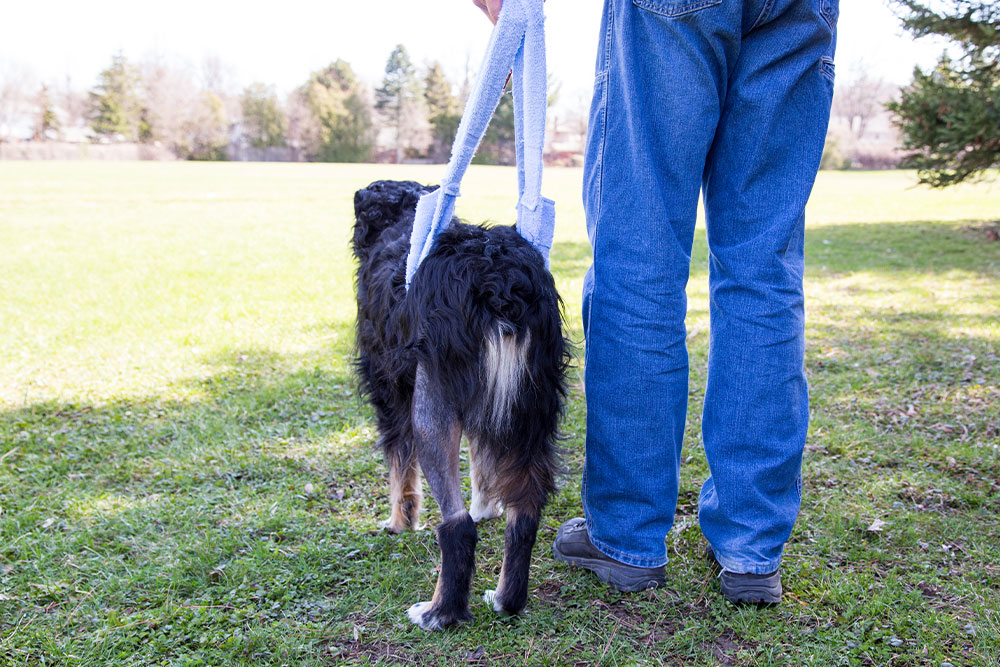
This program typically runs for months, not weeks, and the activity restriction is the hardest part for most families. Skipping the rest, or letting an under-managed dog sprint after a squirrel, can undo the slow stabilization the plan depends on. Joint support supplements and a strict crate rest routine both belong in the plan from the start. Many families also underestimate the home setup it takes: blocking stairs, adding rugs over slick floors for traction, and using a sling or towel under the belly on outings all protect the healing knee during those long restricted weeks.
What Are the Limits and Risks of Skipping Surgery?
The main limitation is that conservative management does not restore stability; at best it lets the body partly compensate. For a small dog that can be enough, but for a larger dog the unstable joint keeps grinding, and arthritis advances faster than it would after surgery. The meniscus, the cushion inside the knee, often tears as a secondary injury in a chronically unstable joint, adding pain and complicating any later surgery. And because the opposite leg bears extra weight while the injured side compensates, the risk of cruciate rupture in the other knee climbs. Conservative care can keep a well-chosen dog comfortable, but for the wrong candidate it tends to mean a slower slide into a more painful, arthritic joint.
If Surgery Is Needed, What Are the Options?
When surgery is the better path, we refer to Veterinary Regional Orthopedic Center, a board-certified surgical specialty practice we trust for orthopedic cases like these. Dr. David Allman and the VROC team perform cruciate surgeries regularly with the equipment, experience, and case volume that produce reliable long-term outcomes, and the continuity works well: we handle the workup and referral, VROC performs the surgery, and post-operative care, pain management, recheck visits, and support return to us.
The most common procedure for medium and larger dogs is TPLO, which reshapes the top of the shin bone so the joint is stable without the torn ligament, producing reliable long-term function. General TPLO outcomes are well documented, returning most dogs to an active, pain-free lifestyle. Smaller or less active dogs may do well with an extracapsular repair that supports the joint from outside with a heavy suture, but TPLO may be the best option for them as well when considering long-term benefits. Recovery either way is staged over about three months, beginning with strict rest and progressing through controlled walks, with structured rehabilitation improving the result. The right procedure depends on your dog’s size, activity, and anatomy, which your surgeon will walk you through in detail.
Frequently Asked Questions About CCL Treatment
Is Conservative Management Ever the Right Choice for a Large Dog?
Occasionally, but it is the exception rather than the rule. A large dog who cannot safely undergo anesthesia, or one whose age and overall health make a long recovery unwise, may be managed conservatively with realistic expectations focused on comfort. For a healthy, active large dog, though, conservative care rarely restores good function, so we would be candid that it usually means ongoing pain management rather than a return to normal.
How Long Does Conservative Management Take to Work?
It is a months-long process, not a quick fix. The strict activity restriction alone usually runs six to eight weeks or more, followed by a gradual, carefully controlled return to activity. Improvement is slow, and some dogs plateau at a level of function that is comfortable for a quiet life but not full athleticism. We reassess along the way and revisit surgery if conservative care is not delivering enough.
Why Do You Refer Out for the Surgery Instead of Doing It Here?
Cruciate surgery is a specialty orthopedic procedure that benefits from the equipment, expertise, and case volume of a board-certified surgical specialist. Referring these cases to VROC means your dog gets the best chance at a lasting result, and we stay involved as your primary care team throughout the workup, post-operative care, and long-term joint management.
Can My Dog Tear the Other CCL?
It is a real risk. Roughly 40 to 60 percent of dogs who tear one CCL go on to tear the opposite knee within one to two years, partly because that leg carried extra weight during recovery. Keeping your dog lean and conditioning steadily lowers the odds, and we keep an eye on the other knee at rechecks.
Will My Dog Get Arthritis Either Way?
Some arthritis is common because the joint was unstable before treatment began. Surgery slows the progression more effectively than conservative care, and conservative care slows it more than doing nothing at all. Lifelong weight control, gentle warm-ups and cooldowns, and joint support supplements all help keep an arthritic knee comfortable.
Making the Right Call for Your Dog
Surgery is the better path for most medium and larger dogs, but it is not the only path, and conservative management is a legitimate, well-defined option for the small, the anesthetically fragile, and the comfort-focused. The key is matching the choice to your individual dog and committing fully to whichever plan you pick, since a half-followed conservative program helps no one.
If your dog is limping or you are weighing whether surgery is truly necessary, request an appointment or contact us, and we will help you choose the path that fits your dog.




Leave A Comment