

Noise Phobia in Pets Beyond Fireworks: Managing Thunderstorm, Appliance, and Everyday Sound Anxiety
Fireworks get most of the attention when it comes to noise phobias in pets, but for many dogs and cats, the real triggers are much more ordinary: a thunderstorm rolling through, the vacuum cleaner starting up, a smoke alarm beeping, or construction noise from down the street. Noise phobia (an extreme, persistent fear response to specific sounds that is out of proportion to any actual danger) is different from a normal startle reaction. A dog that flinches at a loud bang and recovers in a few seconds is having a normal response. A dog that trembles, hides, pants, or becomes destructive for hours after hearing thunder is dealing with something more serious.
The frustrating part is that noise phobias almost always get worse without intervention, not better. Each frightening experience reinforces the fear, and over time the list of triggering sounds can expand. At Oliver Animal Hospital, we take noise phobias seriously because they directly affect your pet’s quality of life and yours. Our veterinary care services include behavioral assessments, medication options, and guidance on environmental management and desensitization strategies. If your pet’s noise anxiety is affecting their daily life, call us at (512) 892-1000 or request an appointment to discuss a treatment plan.
What Noise Phobia Actually Is
Behavioral problems including noise phobia develop through a combination of genetics, early experience, and the compounding effect of repeated fearful exposures. Some breeds carry stronger predispositions: herding breeds, gun-shy dogs, and dogs from shelters with unknown histories tend toward higher baseline anxiety. Cats are also especially sensitive to noise, especially when they are used to a quiet home life.
Noise phobia often co-occurs with separation anxiety and generalized anxiety disorder because the underlying emotional dysregulation drives multiple anxiety expressions. A dog who is already anxious in general is more likely to develop phobias to specific stimuli.
The critical difference from a normal startle reaction is recovery time and function. A phobic response is prolonged, sometimes lasting for hours after the noise has stopped, and it interferes with normal eating, sleeping, and movement.
The Medical Side of Noise Sensitivity
Medical conditions can amplify noise sensitivity beyond what behavior alone explains. Pain from arthritis, dental disease, or undiagnosed orthopedic issues lowers a pet’s threshold for stress responses across the board, including reactions to sound. Ear infections produce literal hearing changes that can make sounds feel different and more alarming. Cognitive decline in senior pets often presents first as new or worsening anxiety responses to environmental triggers.
A pet whose noise phobia has worsened recently or developed in middle or older age warrants a thorough physical examination to rule out underlying medical contributors before the focus shifts entirely to behavior. Our team includes a baseline exam and appropriate diagnostics as part of any behavior assessment.
Thunderstorms: A Multi-Sensory Challenge
Thunderstorms are particularly difficult because they involve multiple simultaneous sensory inputs, not just sound. Dogs with thunderstorm phobia may begin reacting to barometric pressure changes, the smell of rain, static electricity buildup, and the dimming light before any thunder is audible to their families.
Signs your dog is reacting to an approaching storm before you hear it: increased pacing, seeking contact, going to unusual locations, refusing to go outside, or sudden yawning and licking when nothing obvious has changed. These are early stress signals.
Storm phobia consistently worsens with each season without intervention because repeated exposure to the same fear stimulus reinforces the anxiety pathway. This is why early treatment produces better outcomes than waiting.
Household Appliances and Everyday Triggers
Reading communication and body language helps identify when a pet is struggling with ordinary household sounds before the response escalates.
Common household triggers:
- Vacuum cleaners and floor scrubbers
- Smoke and carbon monoxide detectors
- Blenders and garbage disposals
- Construction sounds from nearby properties
- Doorbells and alarm clocks
- HVAC cycling on and off
- Fireworks (seasonal but intense)
- Backfiring cars or gunshots
- Vehicles with a loud bass
Dogs and cats hear in frequency ranges well beyond human detection, and sounds that seem mild to us can be significantly louder or carry frequencies that are painful or alarming to sensitive animals.
The stress ladder framework illustrates how animals move through escalating stress states. Early recognition, before the animal reaches the top of the ladder, is where intervention is most effective and most humane.
Recognizing the Signs
Noise phobia manifests across a spectrum of severity:
Mild:
- Increased alertness or attention to the environment
- Subtle yawning, lip licking, or lowered tail
- Moving to a different room
Moderate:
- Trembling or shaking
- Panting when not hot
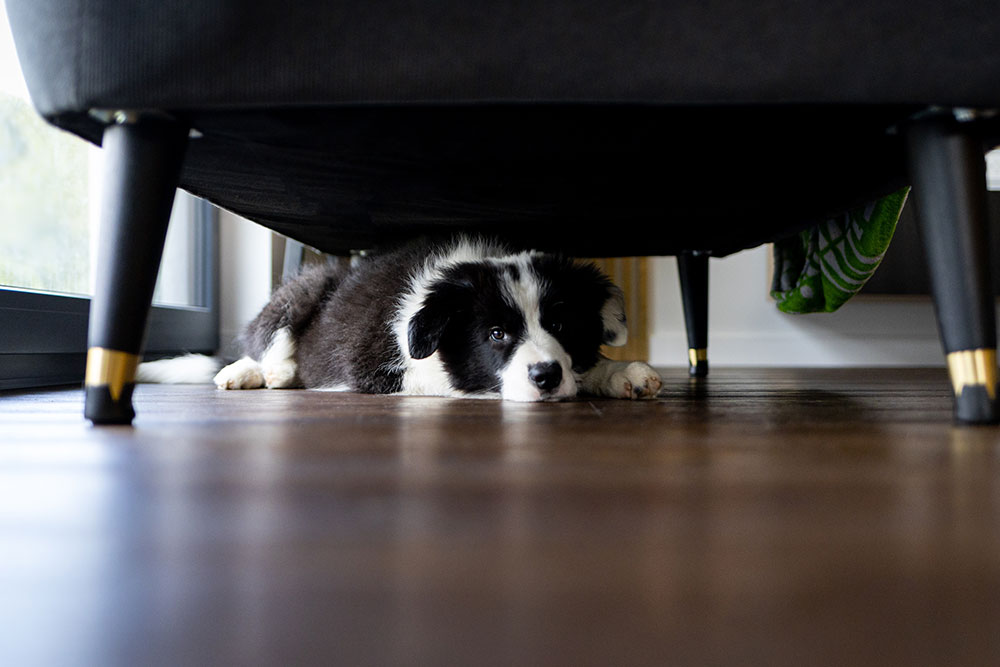
- Hiding under furniture or in closets
- Seeking owner contact or refusing to leave their side
- Reluctance to go outside after an event
Severe:
- Destructive behavior
- Escape attempts (dogs breaking through windows, fences)
- Loss of bladder or bowel control
- Self-injury from escape attempts
- Complete inability to settle for extended periods
Long-term, severe noise phobia degrades quality of life significantly and creates household stress for everyone. It does not resolve on its own.
Creating a Safe Environment During Events
Pet safety needs around noise events apply year-round in central Texas, where storm seasons are prolonged, construction never ends, and Austin’s firework bans are often treated with an “it’s legal if I don’t get caught” attitude. Pets may try to escape to find relief from the noise, so ensure you have their microchip up to date, they always wear a collar with ID, and doors, windows, and gates are closed securely.
The Safe Space
Dedicate one quiet interior room as your pet’s storm retreat. Interior walls buffer sound better than exterior walls. Basements are ideal where available. Load this space with familiar bedding, a piece of your clothing for scent comfort, and access to water. Establish it before an emergency so it is already familiar.
Pet-proofing your home for anxiety situations includes securing areas where a panicked pet might injure themselves and removing fragile items from accessible areas.
Pressure Wraps
Some pets respond well to pressure wraps designed to apply gentle, consistent pressure across the body, similar to swaddling. The effect varies by individual: some dogs settle noticeably when wearing one, while others show no difference. Pressure wraps are a low-risk option to try alongside other environmental supports, particularly for pets with mild to moderate responses. Thundershirt is a popular choice.
Sound Masking
Playing white noise, a fan, or species-appropriate calming music at moderate volume masks environmental sounds and creates a buffer. Close windows and curtains; even the sight of lightning can trigger anticipatory anxiety.
Your Behavior
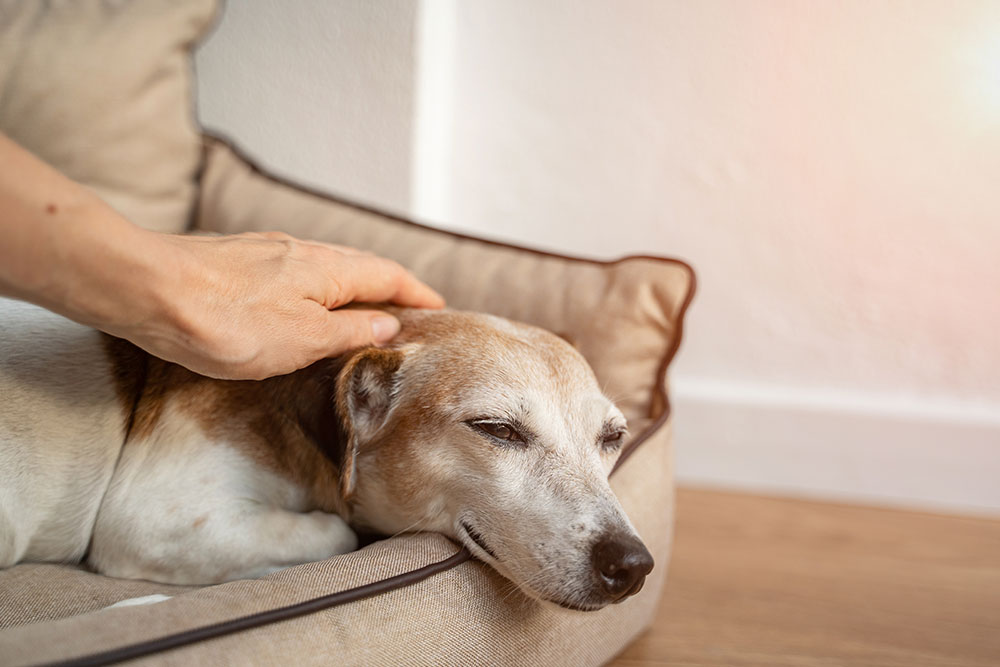
Reassuring a frightened pet does not reinforce fear. The idea that you should ignore a phobic pet because comfort reinforces anxiety is not supported by behavioral science. Remain calm, speak in even tones, and let your pet seek you out. Your calmness communicates safety.
Calming Products
While a calming supplement won’t fix a phobia, it can help in mild cases of sound sensitivity. Pheromones are a nice addition for any pet with generalized anxiety or during longer storm seasons when it’s hard to predict when a noise will start. Diffusers and collars with pheromones mimic feel-good hormones and can help promote relaxation.
Products in Our Pharmacy
- ThunderEase Calming Collar: DAP (dog appeasing pheromone) worn continuously
- ThunderEase Calming Diffuser: room-based pheromone delivery
- Feliway: feline facial pheromone analogue for cats
- Composure Pro for dogs, Composure for cats, and Solliquin anxiety soft chews: L-theanine and other calming nutraceuticals
- Full dog calming supplement and cat anxiety supplement options to try
Behavior Modification: The Long-Term Solution
Desensitization and Counterconditioning
Systematic desensitization involves controlled exposure to fear-triggering sounds at very low volumes, gradually increased only as the pet remains calm at each level. Positive training principles underpin this: each sound exposure is paired with something the pet values (high-value treats, play, praise) so the emotional association shifts from fear to anticipation of something good.
Practical steps:
- Find recordings of the triggering sounds (thunder apps, appliance recordings)
- Begin at a volume so low your pet shows no reaction whatsoever
- Pair each exposure with treats and calm interaction
- Increase volume incrementally only when the current level produces no stress
- Stop any session if visible stress appears and return to the prior volume
Realistic timelines: significant improvement in mild cases over weeks; moderate to severe cases may require several months or even years of consistent work. The process cannot be rushed.
Enrichment Between Sessions
Enrichment and mental stimulation between anxiety events builds the general confidence and stress resilience that makes behavior modification more effective. Enrichment for dogs includes sniff walks, food puzzles, nose work, and training sessions that provide cognitive engagement without physical exhaustion.
Medical and Supplemental Support
When Medications Make Sense
Moderate to severe noise phobias almost always benefit from pharmacological support alongside behavior modification. Behavior modification alone asks a phobic pet to learn while in a state of significant fear, which is the worst possible condition for acquiring new emotional associations. Medication reduces the fear response to a level where learning can actually occur.
Situational medications for predictable events (storms, Fourth of July) are given hours before the anticipated exposure. Trazodone, gabapentin, and alprazolam are commonly prescribed for specific situations.
Daily medications for chronic generalized anxiety disorders address the baseline anxiety that drives noise sensitivity. SSRIs and tricyclic antidepressants take weeks to reach full effect and are not appropriate as situational rescue medications. For pets with severe noise phobias to noises that can’t be predicted or are frequent- like storms, appliances, and construction noise- long-term medication can be very effective.
Talk to our team at Oliver Animal Hospital about which approach fits your pet’s specific presentation.
Prevention and Long-Term Management
Early Exposure in Puppies and Kittens
The socialization window in young animals (roughly 3 to 16 weeks in puppies, shorter in kittens) is the time when exposure to a wide variety of sounds, environments, and experiences at low intensity and in positive contexts produces the best long-term resilience. Playing recordings of thunderstorms, appliances, and city sounds at low volume during meals and playtime allows young animals to build neutral or positive associations before fear can develop.
This is not immune to later development of phobias, but it significantly reduces the baseline anxiety that drives them.
Ongoing Support and Regular Check-Ins
Noise phobias rarely resolve in a single intervention. Most pets benefit from periodic check-ins to assess progress, adjust medications if needed, and refine the environmental and behavioral plan as the pet ages or as triggers change. New medical issues, household moves, schedule changes, and seasonal storm patterns can all affect a previously stable management plan. Scheduling a follow-up specifically focused on anxiety management once or twice a year keeps the plan responsive to your pet’s actual experience rather than where they were six months ago.
Frequently Asked Questions
Will my dog ever fully overcome a noise phobia?
Many do with consistent behavior modification and appropriate support. Some require lifelong management. The goal is reducing the severity and frequency of responses to a level that allows a normal quality of life, and most phobic pets improve significantly with treatment.
Is it safe to give my dog Benadryl for storms?
Diphenhydramine (Benadryl) is sometimes used but has limited effectiveness for anxiety and is not a substitute for appropriate behavioral or pharmaceutical intervention. If anything, Benadryl makes your pet sleepy- creating a pet that’s tired and scared, but still scared. Call us before giving any human medication.
My cat hides during storms but seems fine otherwise. Should I be concerned?
Mild hiding during storms is common and may not warrant medication. If hiding has intensified, your cat stops eating during events, or the recovery period has lengthened, that trajectory warrants a behavioral conversation with our team.
Can noise phobia develop suddenly in an older pet?
Yes, and when it does, it is worth investigating medical causes alongside behavioral ones. Pain, hearing changes, and cognitive decline can all contribute to new noise sensitivity in senior pets. A baseline exam helps rule out treatable medical contributors before the focus shifts to behavior.
Finding Calm for Your Pet
Oliver Animal Hospital’s approach to noise phobia combines environmental management, behavioral support, and medical options tailored to your pet’s specific presentation. Our veterinary wellness care visits include behavioral screening and our team is comfortable having these conversations.
Request an appointment or contact us at (512) 892-1000 to discuss your pet’s anxiety.






Leave A Comment