
IVDD, or intervertebral disc disease, can go from a sore back to a dragging hind leg within hours, and whether your dog avoids surgery depends mostly on how much nerve function is left when treatment starts. Dogs who hurt but still walk steadily often recover with strict crate rest and medication. Dogs who are losing coordination, knuckling over their paws, or getting weak in the rear need a surgical evaluation right away, because once the legs start failing, the odds shift by the hour. If your dog cannot walk on the back legs, is dragging them, or cannot urinate, go straight to an emergency or specialty hospital, because at that point the window for surgery is measured in hours.
A dog who is painful, stiff, or a little wobbly but still walking should not have to wait overnight for answers, and Oliver Animal Hospital in Austin keeps room for urgent and same-day appointments when movement changes suddenly. We check how the legs and reflexes are working, and digital X-rays help us look for other causes of a weak back end, though a bulging disc and the spinal cord itself do not appear on them. Confirming IVDD and knowing whether surgery would help takes an MRI or CT scan, and we will tell you straight if that is where your dog needs to go while we keep them out of pain. If your dog's back seems sore or their hind end looks unsteady, give us a call the same day you notice it.
IVDD in Dogs: The Basics
- A sore back needs same-day attention rather than an overnight wait, and dragging back legs or an inability to urinate is a true emergency.
- Dogs who hurt but still walk steadily often recover with strict crate rest and medication; dogs losing coordination need a surgical evaluation right away.
- Recovery depends most on how much nerve function is left when treatment starts, and the best odds belong to dogs operated on within 24 to 48 hours of going down.
- Cage rest, structured rehabilitation, weight control, and a few changes around the house drive both recovery and the prevention of a second episode.
What Is IVDD, and Which Dogs Are Most Likely to Get It?
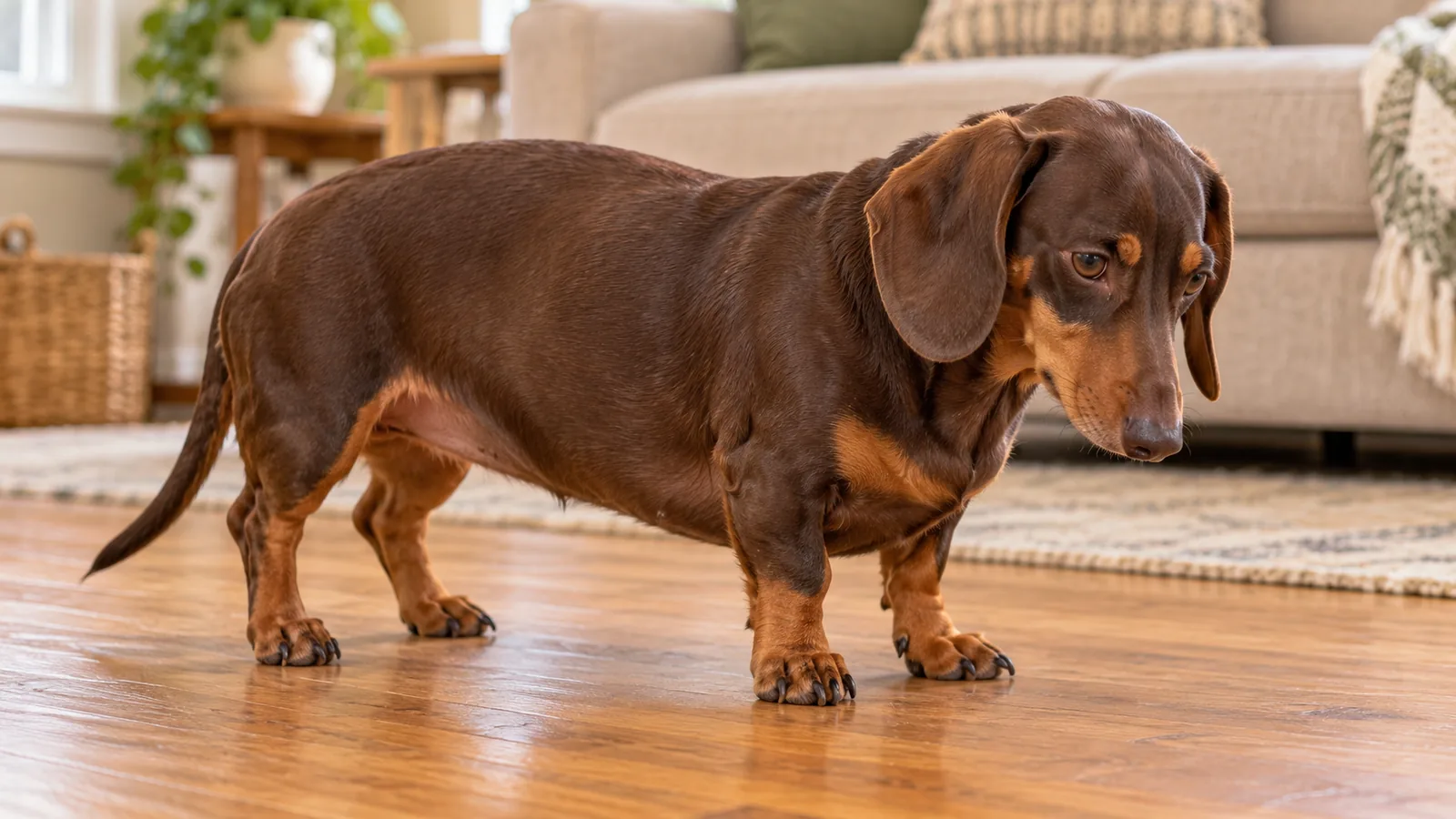
IVDD is a disc problem in the spine, and it lands hardest on short-legged, long-backed breeds: Dachshunds, French Bulldogs, Corgis, Beagles, and Shih Tzus, whose discs can fail before they turn five. Larger breeds like German Shepherds and Labradors usually develop a slower version later in life.
Intervertebral disc disease is the degeneration, bulging, or rupture of the cushioning discs between the vertebrae, and once that material pushes into the spinal canal it presses on the cord and nerve roots. Picture a jelly donut squeezed until the filling pushes out one side and stays there.
Two patterns account for most cases:
- The sudden rupture: disc material blows out forcefully, sometimes during an ordinary jump off the couch, and signs can go from mild to severe in a single day.
- The slow bulge: the disc degenerates over years and presses gradually, more common in larger, older dogs.
What Are the Early Signs of IVDD in Dogs?
Early IVDD usually looks like back pain long before it looks neurological: a dog who turns down the stairs or the couch, holds a hunched, tense back, or yelps when lifted under the chest. Wobbliness, scuffed back paws, and knuckling come next, and weakness can slide into an inability to stand. Many dogs seen at the sore-and-stiff stage never reach the dragging stage at all.
Losing bladder or bowel control means the trouble has moved past a sore back and into the nerves that run those jobs, and that's a phone call right now rather than a morning-after decision. One quick test you can do at home: gently fold a back paw under so the top of it rests on the floor: a dog who can still feel where their feet are, what we call conscious proprioception, flips it upright almost immediately, and a paw that stays knuckled over points to nerve damage that needs same-day evaluation.
While you’re waiting for your pet to be seen:
- Never give human anti-inflammatories: ibuprofen and naproxen can cause stomach ulcers and kidney injury in dogs, and they limit what medications we can safely give.
- Don't let your dog walk it off: keep them confined until we've looked, even if they seem to loosen up on their own.
- Carry them with the back held level: support the chest and the hips together on the way to the car.
Why Does IVDD Move So Fast Once It Starts?
IVDD moves fast because a compressed spinal cord doesn't simply hurt. It swells and bruises, and that secondary injury keeps building as long as the pressure stays, so a dog can be weak but walking at breakfast and unable to stand by dinner.
Veterinarians grade IVDD stages from back pain alone up through paralysis with no deep pain sensation, which means the dog no longer feels a firm pinch on the toes. Every step up shortens the window for a good outcome.
| Grade | What you'd see at home | What it usually calls for |
| 1 | Back pain only, legs working normally | Strict rest and medication, watched closely |
| 2 | Walking but wobbly, scuffing or knuckling the back paws | Medical care can work, with a fast recheck if anything slips |
| 3 | Bears weight with help but can't walk alone | Surgical evaluation |
| 4 | Paralyzed in the rear, can't urinate on their own | Imaging and surgery, quickly |
| 5 | Paralyzed with no deep pain sensation | Emergency referral immediately, with surgery ideally within about 24 hours |
Grades are hard to judge at home, so if you aren't sure what you're seeing, call us during open hours or follow our after-hours emergency instructions.
How Do You Decide Between Surgery and Strict Rest?
The decision turns on how much nerve function your dog still has and how fast it's changing: pain with steady legs usually starts on medical care, and a dog who can't walk or keeps worsening through a rest period needs a surgical evaluation the same day.
X-rays here help rule out other causes of a painful back, including fractures, bone infection, and some tumors. Pinpointing which disc ruptured, which a surgeon needs before operating, takes an MRI or CT scan at a specialty center.
| Decision point | Conservative care | Surgery |
| Who it fits | Dogs in pain who still walk, with mild or no weakness | Dogs who can't walk, keep worsening, or have lost deep pain sensation |
| What it involves | Four to six weeks of confinement, anti-inflammatories, and pain control | Decompression by a veterinary surgeon, then confinement and rehab |
| Timing | Starts the day we examine your dog | Best within 24 to 48 hours of going down |
| Where it falls apart | A rest period only half followed | Waiting to see if the legs come back |
When Is Surgery the Right Call?
Once nerve function is slipping away, getting pressure off the cord has to happen before the damage becomes permanent, and for a fully paralyzed dog it's often the only realistic path back to walking. The most common decompression surgery is a hemilaminectomy, where a small window of bone is removed from the side of the vertebra so the bruised cord has room to swell and the displaced disc material can be lifted away. That's specialized spinal surgery done at a referral center, so our part is catching it early and helping set up the referral to a veterinary surgical team in the Austin area. Our pain management keeps your dog comfortable in the meantime. Some dogs who can still walk end up in surgery anyway, usually when the pain won't come under control or the episodes keep repeating.
When Does Conservative Care Work?
Conservative IVDD management means strict confinement paired with anti-inflammatory and pain medication, and the usual reason it fails is a rest period only half followed, since a few unsupervised sprints down the hallway can undo weeks of healing. It's also management rather than a cure: many dogs have another episode later, so the first sign of a sore back gets taken seriously every time.
What Other Therapies Can Help a Dog With IVDD?
Laser therapy and regenerative medicine can both support an IVDD recovery, and a newer injectable treatment is still in university trials. None of them replaces decompression surgery or strict cage rest when that's what a dog needs, and they work best layered on top of the main plan, usually to manage pain or move a stalled recovery along.
- Therapeutic laser: specific wavelengths of light ease pain and inflammation in the tissue around an injured disc, which can help some dogs cut back on pain medication as recovery moves along. It can run alongside crate rest or post-surgical healing.
- Stem cell therapy: the body's own repair cells calm inflammation and support healing in injured nerve tissue, with the most promising results in dogs whose recovery has stalled or who aren't candidates for surgery. It isn't a first-line treatment.
- An enzyme injection for herniated discs: under study at Texas A&M, this dissolves displaced disc material through a needle instead of removing it through open surgery, though it's still in clinical trials rather than something a practice can offer today. Trials like this are worth asking about for a dog who isn't improving.
What Does Recovery at Home Really Involve?
Recovery at home is two jobs: strict confinement, usually four to six weeks, while the disc and the bruised cord settle, then structured rehabilitation to rebuild the strength and coordination that were lost. The timeline follows your dog's neurological grade rather than how good they look on a given morning.
How Strict Does Cage Rest Have to Be?
Cage rest is not an add-on to treatment: it is the treatment, because movement at the wrong moment can push more disc material into the spinal canal or undo a surgical repair before the spine has stabilized.
- The space: a crate or small pen, big enough to stand, turn, and lie down flat.
- The outings: leashed potty trips only, carried down any steps.
- The hard nos: jumping, stairs, couch launches, and zoomies with another dog in the house.
- The calendar: when activity resumes depends on neurological grade and healing, not on a date you circled.
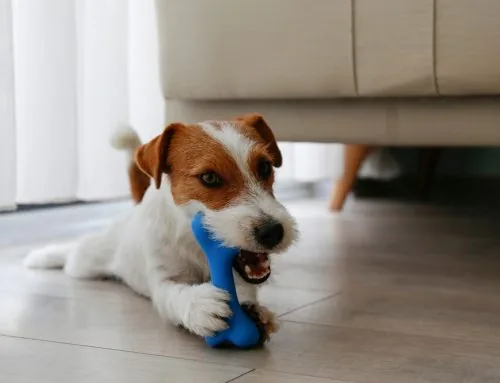
A confined dog still has energy to spend, and food puzzles, gentle chews, and company on the floor next to the crate carry them through those weeks better than physical play.
What Does Rehabilitation Add?
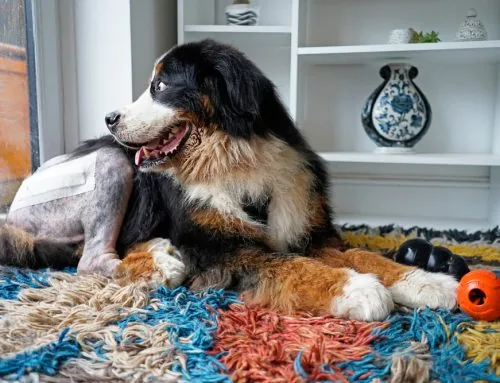
Dogs who go through structured rehabilitation often regain more function than those who only wait out a rest period. The toolkit includes therapeutic exercises, underwater treadmill work, passive range-of-motion movement that keeps joints loose while nerves heal, and a walking plan that grows week by week. A rear-support harness makes those first unsteady trips outside safer for both of you. We'll tell you which exercises are safe to start at home and when a formal program is worth adding.
Can a Dog Live a Full Life Without Full Use of Their Back Legs?
Many dogs who never fully regain hind-end function still live busy, happy lives. Wheeled carts, help emptying the bladder, padded bedding, and ongoing therapy are how those dogs keep moving, and many adjust within a few weeks.
Caring for a permanently paralyzed dog is real work, though: expressing the bladder several times a day, keeping skin clean and dry so sores don't start, and a fair amount of lifting. Weighing quality of life with IVDD means looking at what the dog experiences alongside what the household can sustain. Many dogs thrive on wheels, some families reach a different answer, and either way you can talk it through with us before anything is decided.
How Do You Keep IVDD From Happening Again?
The most controllable factor in preventing a second disc event is weight management, since every extra pound adds load to a spine that has already been injured once. The rest comes down to reducing strain and building muscle:
- Ramps where the jumping was: beds, couches, and the back of the car are where the hard landings happen.
- A body harness instead of a neck collar: pulling pressure spreads across the chest rather than the spine.
- Less high-impact play: fetch on slick floors, wrestling, and long stair sessions come off the list after treatment.
- Gentle core work: slow, controlled exercises build the muscle that supports a healed disc.
Creeping weight is easy to miss on a dog you see every day, so regular weigh-ins at routine wellness visits catch it while it's still two pounds.
Does IVDD Happen in Cats Too?
Cats get disc disease too, and they're quieter about it: IVDD in cats is less common and usually slower moving, surfacing as a reluctance to jump, a cat skipping the litter box, or more time spent hiding rather than the sharp pain dogs show. Heavier cats and some breeds appear to carry more risk, and a cat who stops making a favorite leap onto the counter is worth checking.
What Families Ask Us About IVDD
Can My Dog Recover From IVDD Without Surgery?
Many dogs recover from IVDD without surgery, especially when the main problem is pain and the legs are still working. The catch is that the rest has to be strict for the full four to six weeks, with medication on schedule and no exceptions. Dogs who are losing coordination or can't walk are a different conversation, and for them, waiting to see is what costs the most.
Is IVDD Painful for Dogs?
IVDD usually hurts, and most sharply early on, when the disc first ruptures and inflammation peaks. That's the yelping, the hunched posture, the dog who ducks away from being picked up. If the hurting seems to fade while the legs get weaker, that isn't improvement: losing sensation means more nerve function has been lost, and it's one of the more serious findings on a neurological exam.
How Long Does IVDD Recovery Take?
Plan on four to six weeks of strict rest as the baseline, whether the path is medical or surgical. Milder grades often come back faster, and a dog who went down paralyzed can need months of rehabilitation to reach their new normal, sometimes with a plateau partway through. Consistency matters more than speed, and a dog who truly rests for six weeks tends to do better than one who rushes four.
Getting Your Dog Seen for a Back Problem
If your dog is suddenly sore, wobbly, or losing use of the back legs, call Oliver Animal Hospital in Austin and we'll fit in urgent care during our open hours. If the legs give out overnight or over a weekend, head for an emergency or specialty hospital that can image a spine right away, because surgery decisions at that stage are measured in hours.
Watching a dog lose the use of their back end is frightening, and you don't have to sort out how worried to be on your own. For a mildly sore back, a dog you can't quite read, or a recheck partway through crate rest, request a visit and we'll put hands on your dog and tell you honestly what we find.