

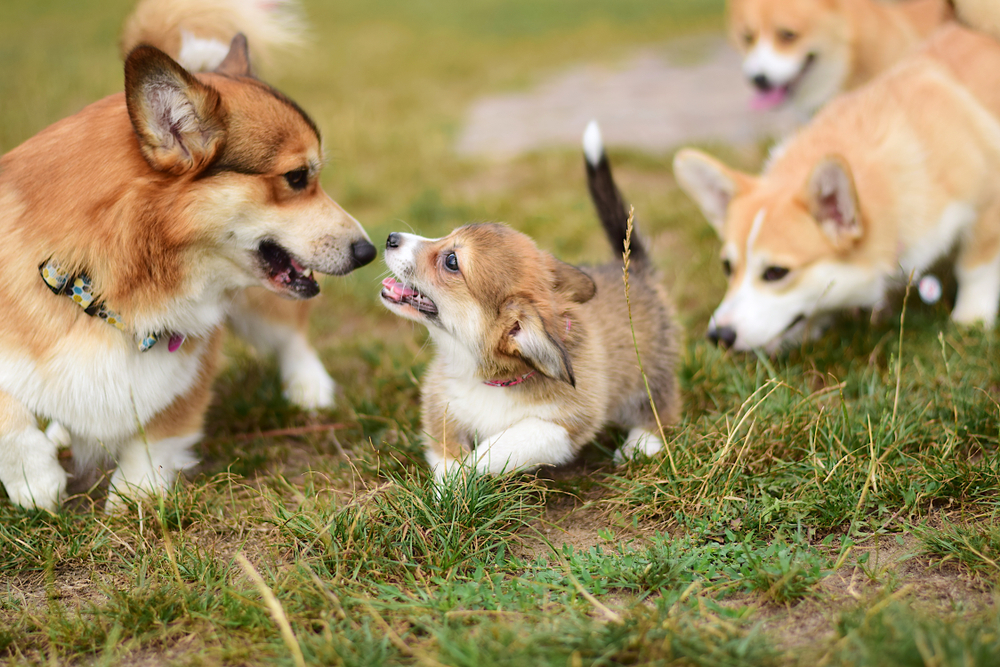
Socializing and training a puppy or kitten works best in small doses, and what matters is not how many new things they meet in a week but whether each one goes well. A young dog or cat builds confidence when they can approach something at their own speed, decide it is ordinary, and leave a little steadier than they arrived. Push past that speed and the same outing teaches fear instead, which is why crowded events and dog parks often set a young pet back. Early training follows the same rule: short sessions that finish on a win teach more than long ones that drag into frustration. The learning window is short, closing near 14 weeks in puppies and earlier in kittens, so a few calm introductions count for more than a packed schedule ever will.
A veterinary exam is one of the experiences that matter most, so we work slowly with young patients and let them set the pace. Oliver Animal Hospital in Austin provides puppy and kitten care, including the vaccines and parasite prevention that make early outings safe, and every visit is a chance to ask what your pet is ready for next. Same-day appointments are often available, so a question about hiding, growling, or freezing does not have to wait. Request an appointment for your puppy or kitten and we will help you develop a plan for the exposures that will stick with them for life.
What Builds a Calm Puppy or Kitten
- The socialization window is short, staying wide open until roughly 14 weeks in puppies and closing near 7 weeks in kittens.
- Quality beats quantity, and one calm introduction your pet chooses to make does more good than a busy afternoon they can’t escape.
- Reward-based training and predictable routines lower anxiety, while corrections, alpha rolls, and punished growls raise it.
- A behavior change that appears suddenly deserves a medical exam first, because pain and illness often look exactly like anxiety.
Why Does the Socialization Window Matter So Much?
Puppies stay most receptive to new experiences from roughly three to fourteen weeks of age and kittens from about two to seven weeks, which makes the socialization window the shortest and most consequential stretch of a pet’s life. Whatever a young brain records as ordinary in that stretch usually stays ordinary for good.
The window works in both directions. A handful of pleasant repetitions builds a category called “fine,” and sometimes a single bad scare builds a category called “danger.” Reading your pet during an introduction tells you which one you’re building.
| What to watch | Comfortable and curious | Worried and asking for space |
| Body | Loose, wiggly, weight leaning forward | Stiff or crouched, weight shifted back |
| Dog tail | Sweeping wag at mid height | Tucked, or fast and stiff up over the back |
| Cat tail | Upright with a soft hook at the tip | Low, thrashing, or wrapped tight |
| Face | Soft eyes, relaxed open mouth | Whites of the eyes showing, tight lips, whiskers pinned flat |
| Choices | Moves toward the new thing on their own | Freezes, hides, or tries to leave |
A pet who won’t take food in a new place has already tipped past comfort. That’s your cue to add distance, not encouragement.
What Does Good Socialization Actually Look Like?
Good socialization is a string of small, positive introductions your pet chooses to make, not a checklist of places visited. One calm stranger who tosses a treat and then ignores your puppy beats an afternoon at a street festival.
Lunging at the end of a leash, hiding from visitors, and standing stiff over a food bowl show up on every list of common behavior problems, and nearly all of them are rooted in fear rather than defiance. The targets worth covering early:
- People: Beards, hats, uniforms, canes, wheelchairs, and kids of several ages, met one at a time rather than in a crowd.
- Animals: Healthy, vaccinated, patient adults who ignore a rude youngster instead of correcting them harshly.
- Surfaces and spaces: Grass, tile, metal grates, wobbly boards, stairs, elevators, and car rides that end somewhere pleasant.
- Sounds: The vacuum, the doorbell, kitchen clatter, and recorded storms or fireworks played quietly while playing or getting a treat.
- Handling: Paws, ears, mouth, collar grabs, brushing, and a nail file touched to one toe.
- Vet-style practice: Standing on a towel to be weighed, a stethoscope on the chest, a brief hug that ends in cheese.
Kittens do most of this work indoors. Their window has often closed by the time they come home at eight or nine weeks, so the job becomes handling practice, carrier time, calm visitors, and household noise rather than field trips.
How Do You Start Early Outings Without Taking Risks?
Safe outings come down to controlling who and what your pet meets. A puppy can watch the world from your arms outside a hardware store, greet one vaccinated friend’s dog in a clean yard, and ride along on errands. Parvovirus can linger in soil for a year or more, which keeps dog parks, pet store floors, and highway rest stops off the list for now.
- Puppy class: Waiting for the full vaccine series costs more behavioral ground than it buys in protection, which is why puppy classes can start as early as seven to eight weeks with one set of vaccines and a deworming on board. A good class screens health, sanitizes floors, keeps play groups small, and teaches you as much as your dog. We handle vaccinations and deworming at those first visits so class can start on schedule.
- The carrier: A carrier that lives in the closet until the morning of an appointment becomes a reliable warning sign. Carrier training works the other direction: leave it out year round with soft bedding and the occasional treat tucked inside until your cat naps there on their own.
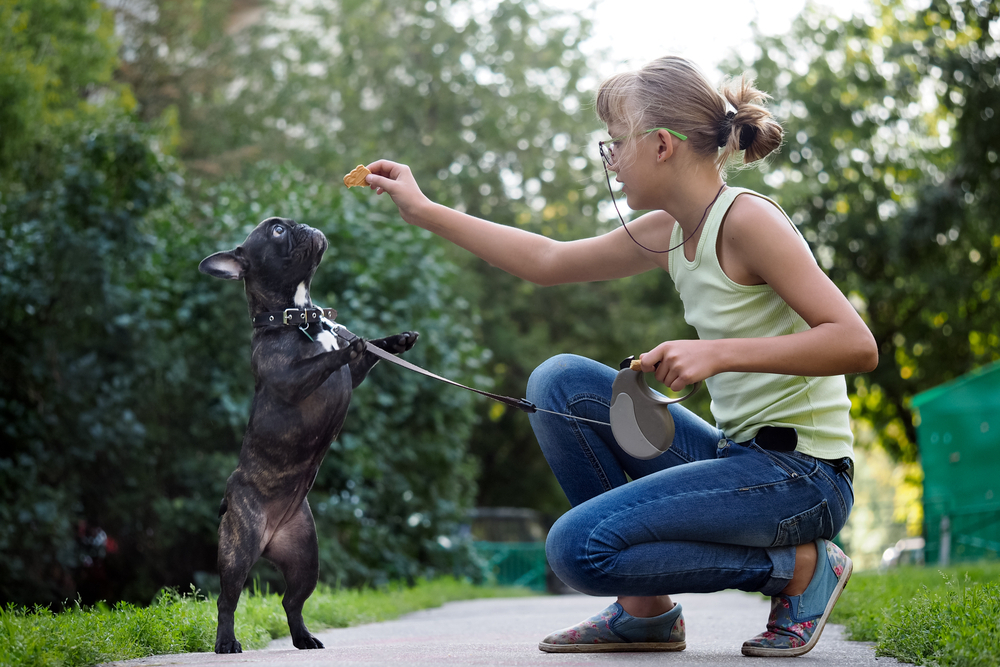
- The leash: Start indoors and when nothing exciting is happening, paying your puppy for standing beside your leg, and simply stop walking when the line goes tight, since forward motion is what rewards pulling.
- Wheels: A dog who never saw a skateboard before eight months old often becomes the three-year-old who barks at every one that passes. Sit a good distance from a busy path, feed while cyclists, strollers, scooters, and wagons roll by, and let the neighbor’s rolling trash bin count too.
Can Your Training Style Make Your Pet More Anxious?
Training method shapes more than manners. It decides whether your pet expects new things to bring good outcomes or discomfort, and that expectation follows them into the exam room, onto the grooming table, and toward every stranger who reaches for their head.
Why does reward-based training make a calmer pet?
Dogs trained with leash corrections, alpha rolls, and shock show more fear and aggression than dogs taught the same skills through reward-based training, which gives a pet a way to make good things happen instead of a reason to brace for something bad. Punishment can stop a behavior in the moment, but it never says what to do instead, and it quietly adds your hands to the list of things worth worrying about. A kitten paid for stepping into the carrier steps in again, while a scolded kitten mostly learns to avoid you.
Does a predictable routine really help?
Cats in particular run on pattern, and a household that feeds, plays, and scoops at roughly the same times gives a nervous cat fewer things to brace for. When life throws a curve, a move or a new baby, hold two or three anchors steady: the feeding spot, the evening play session, and the sleeping arrangement. Most pets ride out the rest.
How Do You Raise a Pet Who Doesn’t Dread the Exam Table?
The work happens at home, in ten-second sessions. Handling a puppy’s paws, lifting a lip, and touching an ear for one second at a time, each repetition paired with something they like, is the whole of cooperative care, and it turns an exam into something your pet participates in instead of something done to them.
Twice a day for a couple of weeks gets you a dog who offers a paw for a nail trim and a cat who tolerates a chin lift without a fight. That changes our side too, since a patient who isn’t panicking gets a more thorough exam, a faster blood draw, and far less restraint. Our gentle, unhurried exams are built for exactly that.
Happy visits help too. Book a short social visit where your puppy or kitten eats treats on the scale, gets a scratch, and goes home. Grooming deserves the same rehearsal: a brush, a hair dryer on low from across the room, a nail file touched to one nail. Start slow, small, and short; gradually increase time only when they are comfortable.
What Is Your Pet Telling You Right Before They Growl?
Long before teeth appear, your pet has already said something quieter. Lip licking, yawning, and turning the head away sit near the bottom of the stress ladder. A growl sits several rungs up, and punishing the growl deletes the warning and leaves the fear that caused it.
A dog corrected for growling often skips that rung next time and goes straight to a snap. Cats climb the same ladder with different rungs: a tail tip that starts thumping, ears rotating sideways, a sudden freeze, then a paw. Treat a growl, a hiss, or a hard stare as useful information, add distance, and change what you were doing.
Which Anxiety Problems Can You Head Off in the First Year?
Nearly every anxiety pattern that fills an adult behavior consult had a quiet first-year version that was far easier to change. A puppy who stiffens over a chew or a kitten who panics alone is showing you the earliest draft, and rewriting a draft is much simpler than rewriting a habit rehearsed for years. The patterns worth getting ahead of:
- Leash reactivity: Barking and lunging at another dog reads as aggression, but reactive behavior is almost always a request for more distance from something frightening. Mark the moment your puppy notices the trigger, pay when they look back at you, and keep enough space that thinking is still possible.
- Food and toy guarding: Taking food out of a puppy’s bowl to prove you can teaches him that hands take things away. The trade game teaches the opposite, so walk past during dinner and drop chicken in, and swap a stolen sock for a treat. Cats guard too, most often a shared bowl in a multi-cat house.
- Separation anxiety: Howling within minutes of the door closing, scratched door frames, and accidents from an otherwise house-trained dog point to separation anxiety rather than boredom or spite. Prevention is deliberately dull: leave for two minutes, come back with no ceremony, and stretch the time slowly. When real panic is already present, we can arrange a referral to a veterinary behaviorist while we start a plan here.
- Noise aversion: Noise aversion runs from a dog trembling under the bed during an Austin thunderstorm to one tearing through a window screen to escape fireworks, and it worsens every season it goes unaddressed. Play storm and firework recordings at a volume your puppy barely registers during dinner, then raise it over weeks, and hold your pet if they want it, because comfort doesn’t reinforce fear.
- Housemate tension: Most friction between pets is about access rather than personality, so give cats enough separate feeding, water, and litter stations that nobody crosses a rival, usually one per cat plus one spread across rooms and floor levels. Dogs do better fed in different spots, with chews handed out in separate rooms and a bed each that stays theirs.
Could Boredom Be Behind the Anxious Behavior?
Instincts that go unused don’t evaporate. They come out as pacing, shredded cushions, and midnight zoomies. A cat who sprints across the house at three in the morning is usually a cat with unspent hunting drive, and cat enrichment answers it with vertical perches, food puzzles, and short play sessions that end in a catch and a meal. Dogs need their nose and their mouth busy, and twenty minutes of sniffing where your dog picks the route empties the tank better than a brisk mile on a tight leash.
| Instinct to feed | For dogs | For cats |
| Foraging | Dinner scattered in the grass or packed into a rubber toy | Portions tucked in a muffin tin or a paper bag hunt |
| Hunting | A slow sniff walk on a long line | A wand toy dragged around corners so she can stalk it |
| Chewing and scratching | Size-appropriate chews, always supervised | Tall posts and flat cardboard next to the spots already in use |
| Safe outdoor time | A long line in a quiet field | A catio or a screened porch |
| Budget projects | Tennis balls covering treats in a muffin tin | A cardboard box maze with holes cut in the sides |
For a pet whose fear runs deeper, the kind that panics through a screen or can’t be left alone, prescription anti-anxiety medication paired with a training plan is worth asking us about.
Which Behavior Changes Should Get a Medical Check First?
Any behavior that shifts suddenly gets a medical look before it gets a training plan. Pain, fading eyesight or hearing, thyroid changes, and neurologic problems can all look like anxiety from the outside. A pet who starts growling, hiding, or having accidents out of nowhere is usually telling you something about their body first.
This comes up most in adults and seniors, though young animals aren’t exempt. An itchy ear makes a puppy flinch away from your hand, and a sore mouth turns a chin scratch into a swat. We start with a hands-on exam and in-house bloodwork, and imaging fills in what hands can’t reach. A dog who suddenly ducks away from a hand near the muzzle may be dealing with dental pain, which dental x-rays can confirm.
Some changes shouldn’t wait. Disorientation, circling, straining, or crying out belongs in front of us that day, and we offer urgent care during our open hours.
Your Puppy and Kitten Socialization Questions, Answered
My puppy is five months old already. Did I miss my chance?
The prime window has closed, but learning never stops. Older puppies, adolescents, and adopted adults all improve with the same tools; they just need more repetitions and more distance from whatever worries them. Instead of casual exposure, you’re working under threshold with food, patience, and short sessions. If your dog is showing real fear rather than mild caution, getting help early makes a big difference.
How much socialization is too much in one week?
One or two new experiences a day, each just a few minutes long, is plenty for most young animals. Watch what happens afterward. A pet who bounces back, eats normally, and settles has had a good day, while one who crashes hard, clings, barks at nothing, or won’t take treats has had too much. Rest days count as part of the plan, since sleep is when the learning gets filed.
My kitten hides when guests come over. Should I coax her out?
Leave her be. Pulling a hiding kitten into a room full of strangers is flooding, and it usually costs you weeks of progress. Give her a covered bed or a cracked-open carrier in the same room, ask guests to ignore her completely, and let treats or a wand toy appear near her hiding spot without anyone reaching in. Curiosity brings most kittens out within a few visits, and the choice to emerge is what builds confidence.
What Early Socialization Buys Your Pet Later
The puppy who decided skateboards were boring becomes the dog who dozes under a patio table on a Saturday morning. The kitten who napped in her carrier becomes the cat who rides across town without a fight. None of it takes a perfect first year, just a few calm minutes most days and the willingness to stop when your pet says they’ve had enough.
Behavior is part of every young-patient visit at Oliver Animal Hospital in Austin, because the worry a family brings us at six months is almost always simpler to solve at ten weeks. Puppy and kitten wellness care is where those conversations start. If something about your pet’s confidence has been nagging at you, reach out and let’s sort it out together.






Leave A Comment