
Which fecal test your pet needs depends on age, symptoms, and what they have been exposed to. A routine fecal float, which looks for worm eggs under a microscope, covers most healthy adult dogs and cats on year-round prevention. A puppy with diarrhea, a new rescue, or a cat whose signs keep coming back usually needs a test that finds parasite proteins or DNA, because several organisms shed too unevenly to show up in one sample. Giardia is the one a single float misses most often, and a pet that keeps reinfecting itself from the yard can stay loose for weeks before anyone names the cause.
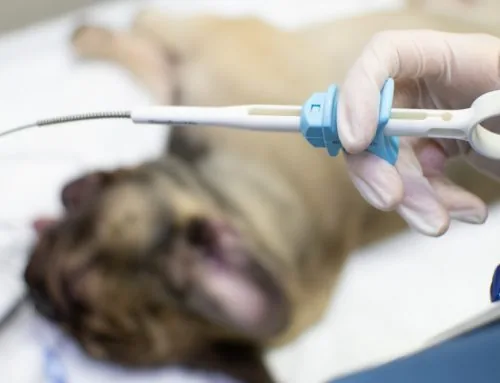
Oliver Animal Hospital in Austin runs fecal floats in our in-house laboratory and sends the protein and DNA panels out when your pet's history calls for them, instead of putting every patient through the same screen. If your pet is healthy and current on prevention, a stool check at the yearly wellness exam may be all it takes. When the diarrhea outlasts a clean parasite workup, we can keep looking here with ultrasound or endoscopy and our visiting internal medicine specialist, so you are not starting over somewhere else. Bring a fresh sample and get on our schedule if it has gone on more than a day or two, and call us right away for a puppy or kitten, or for any pet with bloody stool, repeated vomiting, or unusual lethargy.
Pet Parasite Testing: The Basics
- A negative fecal float means no eggs turned up in that one sample on that one day, not that your pet is parasite-free.
- Antigen testing finds parasite proteins instead of eggs, which is how it catches the Giardia infections a microscope keeps missing.
- PCR reads parasite, bacterial, and viral DNA from one stool sample, so it can name causes a float can't see at all.
- A healthy adult on prevention needs far less testing than a puppy with three days of diarrhea.
What Is a Fecal Float Looking For?
A fecal float looks for parasite eggs and cysts. Stool is mixed with a dense solution so the eggs lift away from heavier debris and rise to the top, where they can be read under a microscope. Roundworms and hookworms shed eggs in large numbers, which is why they're easy to spot, and the float also catches coccidia, a single-celled parasite that hits young puppies and kittens hard.
Tapeworms are the exception families usually catch themselves, as rice-like segments stuck to the fur under the tail, and they come from a swallowed flea or a hunted mouse rather than from the ground. For a healthy adult dog or cat on year-round prevention, a float at routine wellness exams is a sensible baseline.
Why Was the Fecal Test Negative When My Pet Is Still Sick?
A negative float means no eggs or cysts were seen in that sample on that day. It can't rule out an infection that's shedding lightly, hasn't matured enough to lay eggs yet, or lives somewhere a microscope can't reach, and it can't rule out the problems that have nothing to do with parasites at all.
- Uneven shedding: Whipworms release eggs in low numbers and in bursts, so one clean sample doesn't rule out an active infection.
- Timing: A worm that hasn't reached egg-laying age gives us nothing to find while it's already making your puppy or kitten sick.
- Nothing to float: Giardia releases cysts in waves, and bacteria and viruses produce no eggs at all, so there's nothing for the solution to carry upward.
- The sample itself: A smear off the dried outside of the pile, or one that sat out all day, gives us less to work with than a fresh scoop.
- Something besides parasites: Diet changes, a food sensitivity, stress-driven colon inflammation, and inflammatory bowel disease all cause the same loose stool, and in a puppy or kitten any of them can dehydrate a small patient quickly. A clean parasite workup tells us to stop looking for worms and start looking at the gut itself.
Why Does an Antigen Test Find Giardia When a Float Comes Back Clean?
An antigen test finds Giardia during the stretches when the parasite isn't shedding cysts, because it detects the proteins the organism leaves behind rather than the cysts a microscope has to see. Antigen testing is built around one specific organism, so it answers a single question: is Giardia here or not.
Cysts are small and come and go, and a pet who keeps swallowing them from the same damp corner of the yard reinfects themselves and stays loose for weeks. Giardia can also pass to people, which raises the stakes in a house with young kids, and a Giardia antigen screen run here gives an answer in minutes, which makes it a reasonable first move when a float is clean and the stool is still loose.
How Does PCR Stool Testing Work, and What Does It Find?
Stool testing by PCR reads DNA from a single sample, so an organism that isn't actively shedding eggs still leaves a signature behind. PCR, short for polymerase chain reaction, copies tiny fragments of genetic material until there's enough to identify what they came from. Nothing has to be intact or shedding, and one sample gets screened against a long list of organisms at once. That reaches three groups a float can't:
- Protozoa a microscope can miss: Cryptosporidium is small enough to be overlooked on a slide. In cats, a single-celled parasite called Tritrichomonas foetus causes stubborn diarrhea from the large intestine that often needs DNA testing to name.
- Bacteria: Salmonella can live in a dog or cat's gut without making the pet visibly sick and still reach people through stool, food bowls, and bedding. A puppy with loose, mucus-streaked stool is a classic picture for Campylobacter, which doesn't show up on a float or a Giardia antigen test, and Clostridium overgrowth belongs on that same list.
- Viruses: Bloody diarrhea and vomiting in an unvaccinated puppy puts canine parvovirus at the top of the list, and a DNA panel confirms it alongside the bacteria that can look identical from the outside. In cats, feline panleukopenia causes the same sudden vomiting and diarrhea, and canine distemper can drive gut signs too.
Naming the cause changes the plan. Worms need the right dewormer, protozoa need a different drug class, and a viral case needs fluids and supportive care rather than anything aimed at parasites. Antibiotics aren't automatic either: for several bacterial causes they don't shorten the illness and can leave the gut worse off, so a result that rules bacteria out is as useful as one that rules them in. A recheck sample after treatment tells us whether the infection cleared.
A puppy or kitten who's suddenly flat, vomiting, or passing blood needs to be examined quickly, and we see those cases as urgent care during our open hours; call ahead so we're ready when you arrive. Several of these organisms can spread to people, so if there's an infant, a toddler, someone pregnant, or anyone on immune-suppressing medication at home, let us know and we'll aim the testing at ruling that out.
Which Test Fits Your Pet's Age and Symptoms?
The choice rests on your pet's age, how long the signs have gone on, what they've been exposed to, and whether anything has already been treated. No single stool test finds every one of the intestinal parasites dogs and cats pick up, and each of the three methods covers a different slice:
- Fecal float: reads eggs and cysts under a microscope. It's strongest on roundworms, hookworms, whipworms, and coccidia, and it misses Giardia between shedding cycles, immature worms, bacteria, and viruses.
- Giardia antigen screen: reads a protein from one specific organism. It's strongest at confirming Giardia in a loose-stool case, and it says nothing about anything other than the organism it was built for.
- PCR panel: reads parasite, bacterial, and viral DNA. It's strongest on diarrhea that persists or keeps returning, and it misses little, though it can find organisms that aren't the cause.
| Your pet's situation | Where we usually start |
| Healthy adult dog or cat, current on prevention | Float with the annual exam |
| New puppy or kitten | Float, repeated through the vaccine series |
| Newly adopted rescue or shelter pet | Float plus a Giardia screen |
| Loose stool lasting more than a day or two | Float plus a Giardia screen |
| Diarrhea that returns after deworming | DNA panel |
| Bloody stool or vomiting in a young pet | Same-day exam, with a DNA panel alongside it |
A panel isn't the right first step for every patient, because a positive result isn't automatically the culprit. Healthy dogs and cats can carry small amounts of certain bacteria and single-celled parasites without being sick from them, and a long list of findings on a well pet can send a family treating things that were never the problem. A panel also takes longer to come back than a float read here. Our veterinarians know your pet's history and are in the best position to judge which result would change what we do next.
If My Pet Takes Monthly Prevention, Do They Still Need Stool Checks?
Year-round parasite prevention narrows the odds considerably, but no product covers every organism a pet can pick up, so a pet who hasn't missed a dose still needs a stool check. Monthly products handle the common worms well and leave gaps around Giardia, coccidia, and bacteria. For most healthy adults, screening means one stool sample a year, usually alongside the exam and whichever core vaccinations are due.
- Where they spend time: Central Texas stays warm and humid enough that eggs and cysts hold up well in soil, and an Austin dog hiking the Barton Creek Greenbelt every weekend meets different risks than a cat on a screened porch.
- What shifts the plan: A hunter, a household with small children, or a yard that backs up to a creek all call for closer screening.
- Age and history: Puppies, kittens, and any pet with a parasite history get checked more often.
Over-the-counter dewormers cover a narrow range of worms and do nothing for Giardia, coccidia, or bacteria, so a pet can be dosed again and again and stay loose. Never give a dog or cat human anti-diarrheal or pain medication; several are dangerous at pet-sized doses.
What Families Ask Us About Parasite Testing
What makes a usable stool sample?
Fresh matters more than large. A scoop about the size of a walnut, collected the morning of the visit and sealed in a bag in the refrigerator, reads far better than one that sat out overnight or baked in a hot car. Take it from the middle of the pile rather than the dried outer surface, and skip the freezer. If you can't catch one in time, tell us at check-in and we can often collect what we need here.
Does my pet need a Giardia antigen test or a PCR panel?
When Giardia is the main question, the antigen test answers it in minutes, so it's the natural first step. When diarrhea has outlasted deworming or keeps returning, a PCR panel checks parasites, bacteria, and viruses in one pass.
Is a fenced yard enough to keep parasites out?
A fenced yard is not a closed system. Most intestinal parasites get in through the mouth: sniffing ground where another animal has gone, drinking from a puddle, grooming a dirty paw, or hunting a mouse. Giardia survives in damp soil, puddles, and standing water, and wildlife and neighborhood dogs keep reseeding it, since raccoons, opossums, and roaming cats cross most fenced yards overnight. Picking up stool promptly, dumping standing water, and keeping outdoor bowls clean all cut down what your pet swallows on the next lap around the fence. Puppies and kittens are a separate case, because many arrive already carrying worms from an infected mother, which is why they get checked on a schedule rather than only when something looks wrong.
You Don't Have to Guess Which Test Your Pet Needs
Loose stool that keeps coming back wears a family down, and the answer usually comes from matching the right test to your pet's history rather than running every test at once. Bring a fresh sample and the story of what's been happening, and we'll tell you which test would change the plan.
Oliver Animal Hospital is right here in Austin, so book a visit any time loose stool has lasted more than a day or two or keeps coming back.